The mission at Thin Blue Line of Leadership is to share positive leadership tactics with the field of law enforcement. Positive leadership cannot be achieved without recognizing the various levels of accountability that exist in law enforcement and learning to work those relationships.
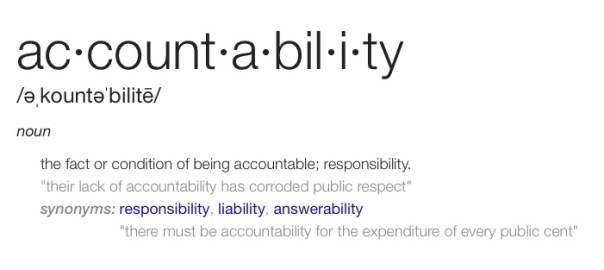
Accountability is defined as the obligation of an individual or organization to account for its activities, accept responsibility for them, and disclose the results in a transparent manner. There are 3 primary accountability relationships within law enforcement: Department <–> Community, Department <–> Officers, and Supervisors <–> Officers. Each accountability relationship is a two-way street that must be equally travelled on both sides in order for there to be shared successes.
Department <–> Community
The relationship between a community and a police department is vital to both the safety of the community and the success of the department in providing that safety. Police departments are funded by tax dollars from the community they are entrusted to protect. The community is accountable to the department by giving them the funding to hire the proper number of officers, compensate them appropriately, and obtain the necessary equipment to meet the needs and expectations of the community. In turn, the department is expected to serve their community by treating them with dignity and respect at all times. Communities accept that police departments must at times use force, but expect it to be done with the utmost responsibility. Support from the community ultimately gives police departments the authority they need to get the job done. There cannot be an “Us versus Them” mentality in order for both side of this relationship to succeed.
Department <–> Officers
The relationship between a police department and their officers must be one of mutual respect and understanding. Officers must be accountable to the department that has hired them to hit the streets each day and keep the community they serve safe. The department must provide the necessary equipment, training, recognition, and pay to give their officers the most advantageous position possible for dealing with the law-breakers of the community. In other words, departments must take care of their officers and find ways to set them up for success. In order to demonstrate their success, officers must show through their community interactions and production that they are working for the wage they are being paid by meeting the mission and standards set forth by the department. Officers must have respect for the power bestowed upon them and be diligent in upholding the Law Enforcement Code of Ethics. Without officers there is no police department and without a police department there are no officers.
Supervisors <–> Officers
The relationship between supervisors and officers is the most direct accountability relationship of the three. There is direct influence on both sides based on the amount of contact, level of communication, and strength of connection developed while serving the community as a team. The supervisor must walk the tightrope of being the translator between the needs of the department and those of the officers. By taking the time to establish a positive squad culture with their officers and developing trust, the supervisor can take any department initiative, present it to their officers, and get buy-in. In turn, officers must be able to trust their direct supervisor and truly believe that the supervisor has their best interests in mind. As discussed in the blog “7 Macro and 7 Micro Ways of Creating a Positive Squad Culture” it is up to the supervisor to give their squad the “gift of going second” in establishing a trust-based relationship. Each side of this accountability relationship must give a little to gain a lot.
As written in multiple other Thin Blue Line of Leadership blogs, people are policing. Without strong relationships in these 3 areas of accountability; morale, trust, production, compensation and many other areas suffer. It would not be a stretch to say that on some level the events last month in Ferguson, Missouri are attributable to issues in at least one, if not all, of these accountability relationships. This is why these 3 relationships are so vital to policing.
Do you feel there is a more important accountability relationship we missed?
Share your thoughts or comments with us below or on our Facebook page. Continue saving the world one call at a time and as always, LEAD ON!

 Thin Blue Line of Leadership