Monthly Archives: January 2018

Shifting Gears in Policing

Recently Harvard Law Review published an article by Seth Stoughton entitled “Law Enforcement’s ‘Warrior’ Problem.” It discussed the need for law enforcement to move beyond the idea of being “warriors” and accept the concept of becoming “guardians.” Stoughton wrote that the concept of being warriors started with the best of intentions, but has “created substantial obstacles to improving police/community relations.” Whichever side of the discussion you fall on, warrior or guardian, it is a huge over simplification to think that a single mentality can define the role patrol officers must play each shift to remain safe and protect the community. Law enforcement cannot be one or the other; we must have the ability to fill many different roles dependent upon the circumstances presented by the situation.

As a patrol sergeant with one of the youngest squads in the department, I knew that it would be vital to define the mentality I expected my officers to have while on the road. I could not support a singular mentality whose sole purpose was to either keep them safe or allow them to more easily interact with the public. Through this internal debate, I concluded that one of the biggest challenges facing law enforcement is getting away from any concept that takes a “one size fits all” approach. Patrol officers should not be asked or expected to be just warriors or just guardians. They should be expected to be and trained to be warriors, guardians, caretakers, counsellors, educators, enforcers, and community representatives with the ability to shift gears from one role into another seamlessly based upon the circumstances of the call.

Officers must possess the intelligence to quickly assess a situation, decide on the role they must play, and then execute it successfully while continuing to assess their ever changing environment. As law enforcement supervisors, we have to assist our officers in rectifying the conflict between showing compassion, empathy, and understanding while at the same time being ready to maintain control of the situation and possibly use force. Training the ability to show compassion, empathy, and understanding while also maintaining officer safety is the challenge law enforcement faces and the primary reason why a “one size fits all” mentality so easily took hold in the first place. One requires constant thinking, adapting, and assessing; while the other allows for simplicity.

Department training must adapt to this more complicated and effective style of policing. Just as it is critical for officers to have on-going training in firearms, legal updates, emergency driving, and defensive tactics; it is equally as important to find training techniques that emphasize problem-solving, de-escalation, and proper “gear selection” based upon a call’s circumstances. There must be an emphasis on finding solutions to problems and not just being a Band-Aid.

I understand that making training changes within a police department can be like turning around the Titanic; so here are 10 ways patrol supervisors can reinforce “gear shift” thinking within their squad.

  1. When officers call you with a question, walk them through your decision-making process by asking these 3 questions: 1) What do you know? 2) What do you want to do? 3) What is your intent with the chosen solution? Then affirm their answer or provide other options, but ultimately leave the decision up to the officer unless it endangers or violates rights.
  2. Take the time to train officers in all of the department’s available resources and referral services such as crisis lines, shelters, etc. Knowing the options available to them increases the number of possible solutions to a call for service.
  3. Debrief calls in detail and discuss alternative options at critical decision points.
  4. Send officers to outside trainings that build their knowledge base in other roles such as Crisis Intervention Training (CIT), negotiating, and de-escalation techniques.
  5. Be on the road as a resource to your officers, but refrain from taking over calls unless necessary. Help them to recognize opportunities to use the department’s available resources and referral services when making an arrest is not the best “gear” to be in. Remember, solutions not Band-Aids.
  6. Tabletop training scenarios in briefing with multiple acceptable endings: arrest, warning/discretion, use a resource, or make a referral. Just like reality, there is rarely a single correct answer.
  7. Discuss de-escalation techniques and how to tone down “command presence” without sacrificing officer safety. Have officers that have attended training on topics like this share what they learned upon returning to the squad.
  8. Recognize and reward thoughtful, creative problem solving in briefing. What you reward will be repeated.
  9. Bring experts into briefing to discuss department resources and all the ways they are available to help officers when they are on calls. Do not assume that your officers know all of the resources available to them.
  10. Train your officers to be leaders on calls. When officers from other squads are hesitant to make a decision, your officers can take them over and set the example of finding solutions.

So, how does law enforcement need to be training for the future? Not just as warriors and not just as guardians, but as thoughtful officers that respond to situations in the most appropriate gear for finding solutions to the problems they are presented with.

The mission at Thin Blue Line of Leadership is to inspire law enforcement leaders to be better than they were yesterday. Positive leadership and creating a positive squad culture are on-going commitments that must be nurtured and developed over time. To lead your officers in this direction, you have to make the most out of the precious time you have available in briefing to establish the culture you wish for them to demonstrate on your road.

Share your thoughts or comments with us below or on our Facebook page. Continue saving the world one call at a time and as always, LEAD ON!
BRIEFING IDEA: What makes a good beat cop?

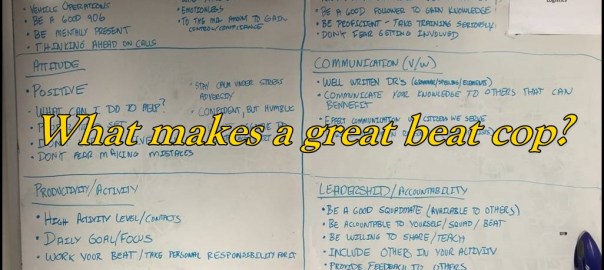
Mark Miller, Vice President of Leadership Development at Chick-fil-A, once said, “People will do extraordinary things when a vision resonates deep inside of them.” The simple briefing idea described below helps to create a vision of what makes a great beat cop. It gets the entire squad on the same page regarding what they should expect out of each other and themselves as they are working their beats and also provides a positive way for them to bring up issues they may currently be having with squad mates. With everyone on the same page, you find that it becomes easier for them to hold themselves and each other accountable. As a supervisor, this activity gives you a great starting point for having conversations about creating a set of squad expectations or discussing issues  with current squad expectations.

BRIEFING IDEA: What makes a great beat cop?

Can you clearly define what makes a great beat cop? Stop and think about it for a moment . . . write down the top 5 traits you would expect to see. Now, ask yourself this, if you walked into your briefing and had your officers do the same thing, would their list be the same or at least similar to yours? The answer to that question is going to depend primarily on the strength of culture that has been established in your department and, more specifically, the one you have established on your squad. So, here is a simple idea to get everyone on the same page.

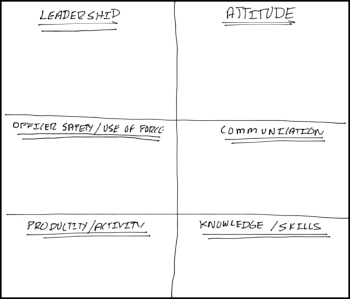
1. Before the briefing, choose 6 general categories that you feel a great beat cop can be defined by. For my briefing, I chose Leadership, Knowledge/Skills, Attitude, Communication (Verbal or Written), Productivity/Activity Level, and Use of Force/Officer Safety.

2. To start, walk into your briefing room and on a whiteboard draw a 2 by 3 grid for a total of 6 boxes. If you do not have a whiteboard, hang 6 large sheets of paper on the wall. I found that by not telling the officers what I was doing, it built up the intrigue of what was about to happen.

3. At the top of each box, write in one of the 6 categories that you chose in step #1.Jason's Stuff P6

4. To set the conversation up, ask your officers to envision what they think makes a great beat cop; someone that they would absolutely love to work with. Then, point out that there is probably a different vision for each person in the room based on their prior experiences. Explain that the object of this briefing is to define what WE, as a squad, believe makes a great beat cop so that everyone is on the same page when we head out to hit the streets together.

5. To help start the conversation, start by calling on officers directly, but in a rotation so everyone gets to have input. Ask each officer to give one idea to add to any of the 6 categories. I would suggest starting with the officers that you have previously identified as the leaders on your squad. When they are involved first, the others will be more comfortable speaking up. Do not forget to include yourself at the end of each rotation; you are part of the squad and when they hit the road your officers are an extension of your vision and leadership. For each idea you write, there is an opportunity for potential discussion or to bring up examples of times when you have seen officers exemplify this behavior.

Board

6. After several rounds and the officers have become more comfortable with the discussion, review the items listed in each category. Read the items aloud and ask if there is anything that has been missed to complete the discussion for each category. This is your opportunity to steer the conversation towards areas the officers may not have thought about, but seek their input on the items you bring up. This cannot become the supervisor’s list or you will lose their buy-in. (Note: If you are generating a lot of good discussion, consider using a second briefing to complete the list.)

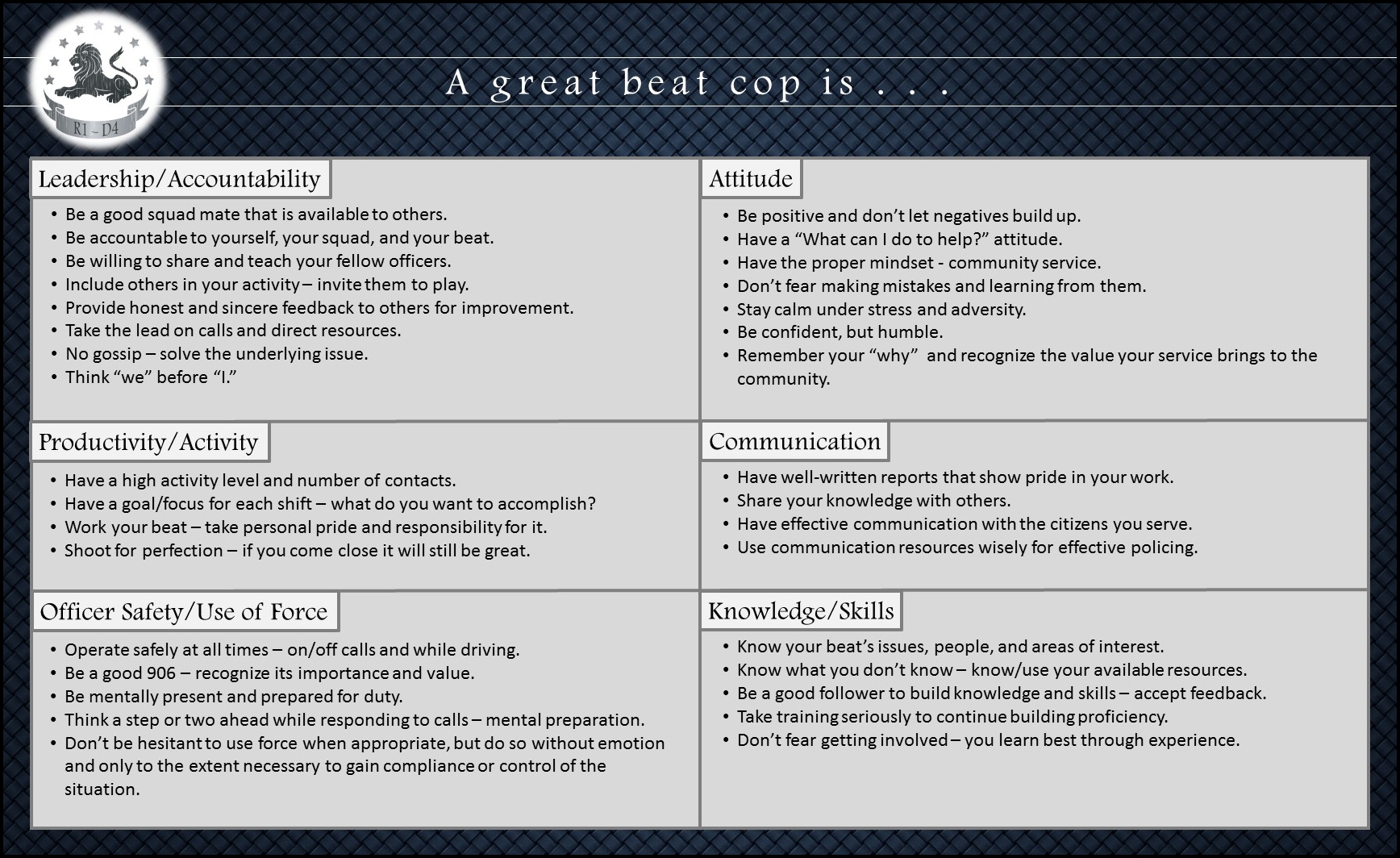
7. After the list is completed, write it down and put it into a presentable format to be handed out to the squad. See my squad’s final list below.

R1 Designs

8. Hand out a copy of the final document to each officer. Review the items listed for each category and ask your officers if there is anything listed that they cannot agree to do on a daily basis. Emphasize that this description is what everyone, including the supervisor, should be shooting to be on a daily basis. In my briefing, I made the point that nobody is going to be perfect 100% of the time, but if we are striving to demonstrate all of the positive qualities listed, then we will be pretty great beat cops.

It may feel awkward to think about leading a discussion like this in briefing; especially if you have never done anything similar. If that is the case, my suggestion would be to set it up by sharing with your officers you want to try something different in briefing a couple of shifts in advance. By simply giving a heads up about the change, it will set them up to be more understanding when you start this briefing and they won’t waste the time wondering why this just came out of nowhere.

The mission at Thin Blue Line of Leadership is to inspire law enforcement leaders to be better than they were yesterday. Positive leadership and creating a positive squad culture are on-going commitments that must be nurtured and developed over time by anyone in a law enforcement leadership position. To lead your officers in this direction, you have to make the most out of the precious time you have available in briefing to establish the culture you wish to have on your squad.

Share your thoughts or comments with us below or on our Facebook page. Continue saving the world one call at a time and as always, LEAD ON!

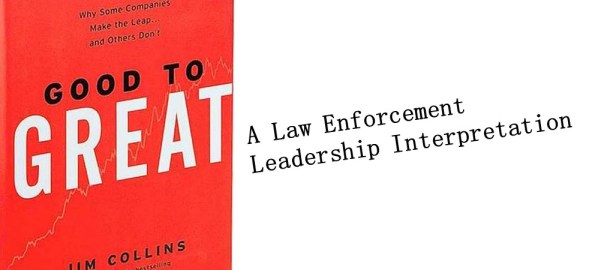
Good to Great: A Law Enforcement Leadership Interpretation

Jim Collins starts his book, “Good to Great,” with this simple quote: “Good is the enemy of great.” That quote struck me like a lightning bolt because, all too often, law enforcement gets stuck in the rut of thinking that good is a fine place to be. How often have you heard the phrase, “Good enough for government work” thrown around the department? We, as first-line supervisors, preach to our officers about avoiding complacency, but if we allow our squads to just be good then aren’t we exemplifying complacency in our leadership?

Good-is-the-Enemy-of-Great

Whenever I read a book of this type, I am always thinking about how I can apply it in my role as a sergeant of eight officers that are within my span of influence. So, I decided that I would write this blog to share my thoughts on the major concepts described in “Good to Great” and how I see those applying to law enforcement leadership.

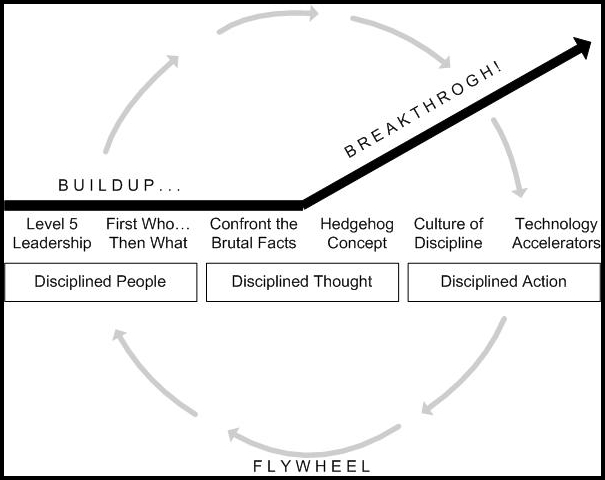
Before going any further, let me give you an idea of how the “Good to Great” concepts were formulated. Jim Collins and his research team conducted a detailed analysis of over 1,400 Fortune 500 companies looking for ones that demonstrated a very specific pattern of growth: At least 15 years of good results, a clear transition point, followed by at least 15 years of great results. Great results were defined as having a total stock return of at least 3 times the general market over the same period in time. Of the 1,400 companies they looked at, only 11 met that very specific criteria. They then began the lengthy process of analyzing what the distinctive traits were that those companies had in common which took them from good to great.

GoodToGreatBreakthrough1

Now the question becomes, what does this business mumbo jumbo have to do with policing? Following the success of “Good to Great,” Jim Collins began hearing a similar question from multiple areas of social sector work – law enforcement, non-profit organizations, hospitals, education, etc. In 2005, he released a monograph (like an additional chapter) to supplement the book entitled, “Good to Great and the Social Sectors.” This supplement is geared specifically to the social sector and the unique constraints faced by these types of organizations such as hiring, firing, compensation, etc.

As he did in the original book, Jim Collins starts the monograph off with a profound statement, “We must reject the idea – well-intentioned, but dead wrong – that the primary path to greatness in the social sectors is to become ‘more like a business.’” Business concepts on leadership have their place, but they must be properly interpreted in order to effectively be applied in law enforcement. Law enforcement must be led in a way that only a law enforcement leader can; by someone that has handled calls, made arrests, used force, and been in situations that they will never forget. The bottom line is this . . . law enforcement measures greatness through their service to the community, not profits.

Before proceeding into the “Good to Great” framework, the question law enforcement supervisors must answer is how do you define greatness in policing at your department? What specifically defines a good officer and what specifically defines a great officer? The only way to determine that answer is to look at your department’s mission statement, goals, strategic plan, performance evaluation process, etc. and understand how those things are measured at the officer level. Once it is understood what your officers must demonstrate in order to be considered great, under the guidelines of your department, then you can proceed in applying the Good to Great concepts.

Just a quick note to any chiefs or command staff that may read this . . . if you cannot define greatness in your organization in concrete detail, then neither can your officers or first-line supervisors. Honor-Initiative-Excellence are great qualities to put on the side of a patrol car or hang on a wall in the briefing room, but if you don’t define them in concrete, “this-is-what-it-looks-like” terms; then they are just words.

STAGE 1: DISCIPLINED PEOPLE

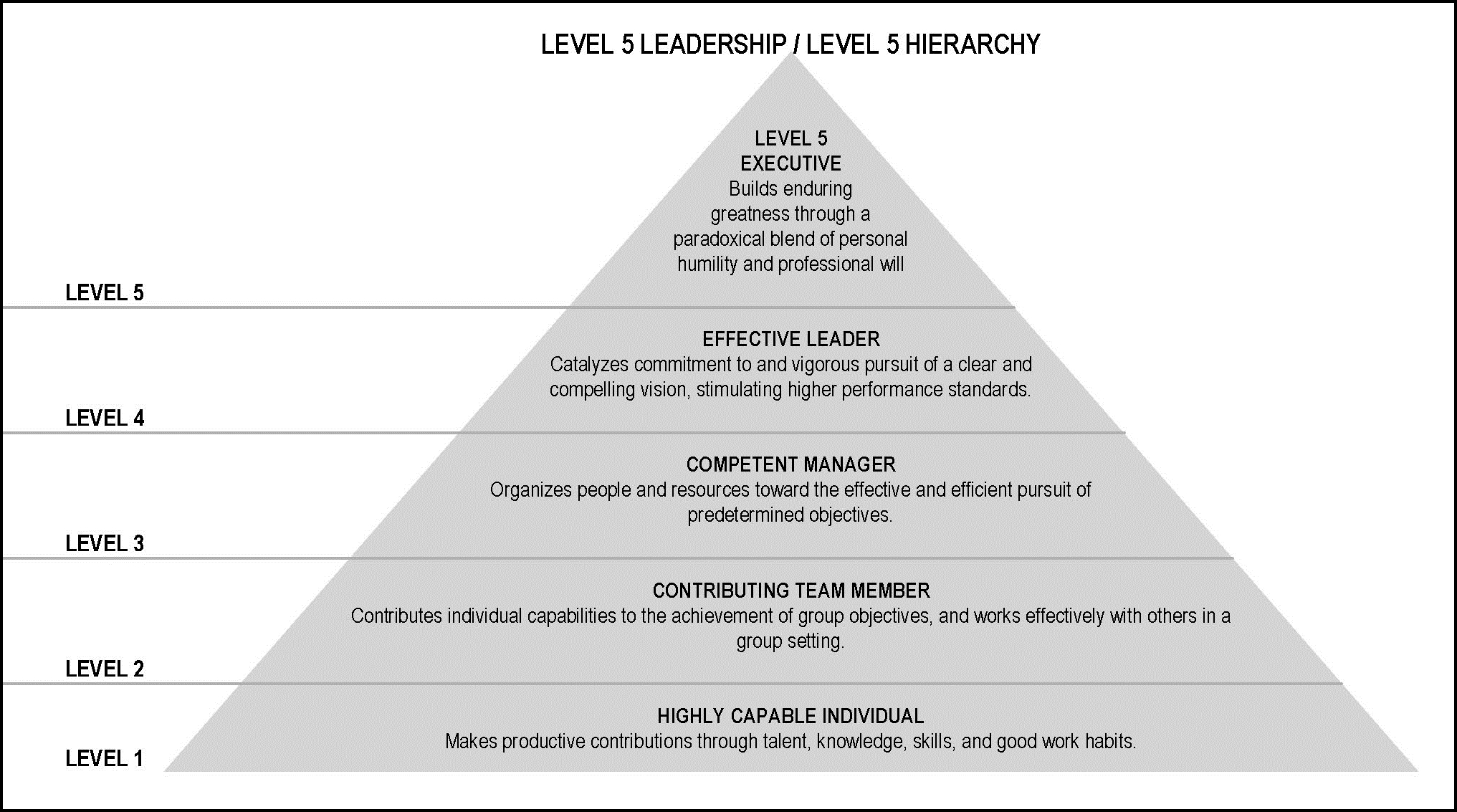
Level 5 Leadership: For a squad to go from good to great, it is first necessary for them to have what Jim Collins refers to as a Level 5 Leader at the helm. A level 5 leader is ambitious and initiative-driven when it comes to applying their department’s definition of greatness to their work as a police officer. I say police officer because regardless of rank, we all started as police officers and that is the common denominator when it comes to the reason we started in this career. Level 5 leaders demonstrate that it is more about the job and their officers than themselves. They share a passion for learning, teaching, and leading other officers in the proper way to police. Ultimately, level 5 leaders realize their success comes through making those they lead successful. (For more similar to this, see our blog entitled, “The 10 Law Enforcement Leadership Commandments.”)

level-5-leadership-hierarchy

First Who…Then What: The most valuable resource in a police department is not people, it is having the right people. The only way to take a squad from good to great is to have the right people on it; ones that are willing to get on board and make the transition to greatness. Unfortunately, due to the structure of police departments, we cannot always control who we have on our squads. Therefore, it is incumbent of the first-line supervisor to do everything within their power to mold their officers into being the right people. This will not always work, but it is an effort that must be made. Developing the right people can be accomplished through training, honest evaluations, handling call with them, briefing discussions, assigning them to ride with more experienced officers, good field training officers, etc. Once you have the right people on your squad, then you have to get them into the “right seats on the bus.” Assess the skills and talents that your officers possess and assign them to beats where those skills and talents can be best applied. Then, help direct those officers into specialty units that fit their skills and talents to benefit the department as a whole. (For more similar to this, see our blog entitled, “6 Ways to Positively Influence Officer Behavior.”)

STAGE 2: DISCIPLINED THOUGHT

Confront the Brutal Facts: Confronting the brutal facts is all about retaining unwavering faith in the goal of becoming great while at the same time recognizing the challenges to that goal. They may stem from the community, the department, policies, staffing, politics, compensation, or internal squad issues.  You must possess the discipline to recognize your current reality and work tirelessly to improve the circumstances you find yourself in no matter the difficulties. Find like-minded individuals within the department that also have the desire to be great and collaborate with them to begin tackling the issues that you can control. Don’t waste your time on things you can’t control. Dealing with these issues will take dedication, time, and effort; but as long as your intentions are directed towards reaching the goal, the squad will come along. (For more similar to this, see our blog entitled, “Change and Reputation.”)

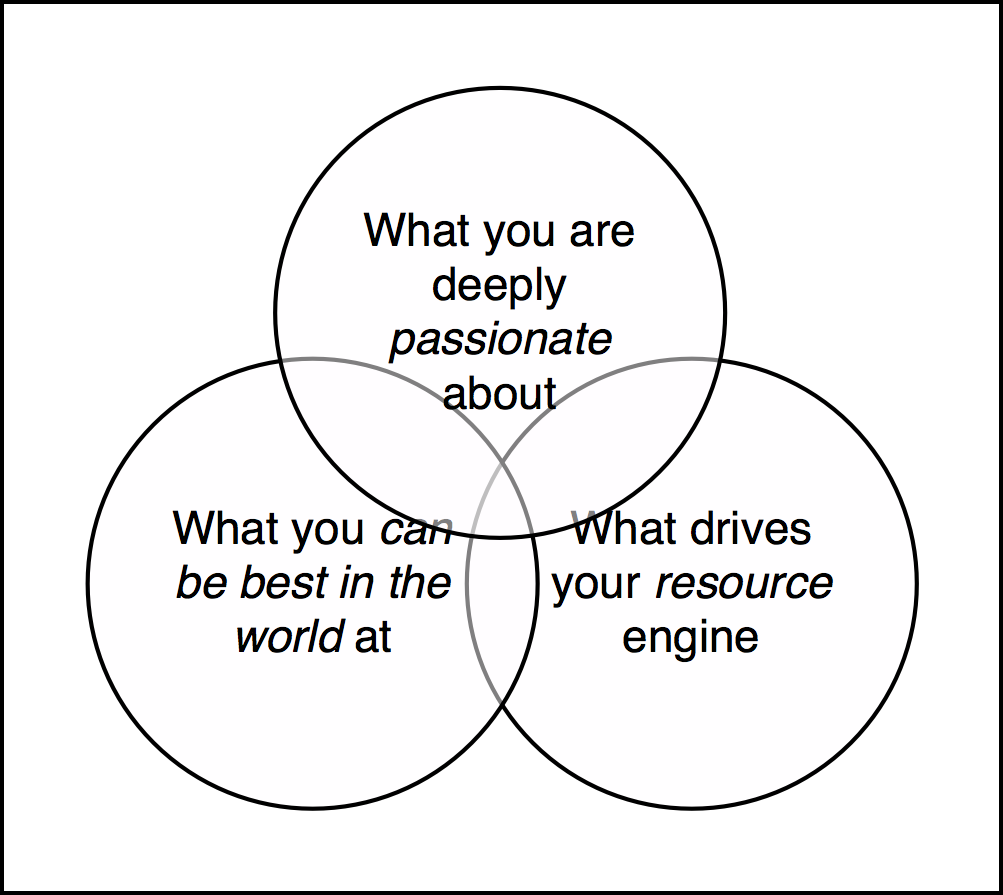
The Hedgehog Concept: The Hedgehog Concept has to do with having simple, basic principles for your squad to follow that support the goal of becoming great and maintaining that greatness. These principles should be the intersection of the 3 circles – what you can be the best at, what you are passionate about, and what drives your department’s vision of greatness.

good-to-great

The first two circles are pretty self-explanatory, but measuring a police department’s vision of greatness can be difficult because it is not as simple as measuring profits in a business. A police department’s vision of greatness comes through in their community’s perception of them. Does the community trust that the department is there to protect them and act in their best interest with the power and authority that has been granted upon them? Like the Colorado River slowly forming the Grand Canyon, the thing to remember about the Hedgehog Concept is that the simple, basic principles of your squad need to be applied and reinforced on a consistent and on-going basis. (For more similar to this, see our blog entitled, “Culture in Just 4 Words”)

STAGE 3: DISCIPLINED ACTION

Culture of Discipline: Absolute power corrupts absolutely. As law enforcement, we have a great deal of power and authority and we must be constantly accountable to the community we serve. There are many pressures that can instigate the slide down the slippery slope of dishonesty, malfeasance, and abuse of power. Therefore, it is incumbent upon the first-line supervisor, to nurture a culture of discipline within their squad that does the right things, at the right times, for the right reasons without emotion or prejudice and for the good of the community at-large. If a culture of discipline is set in place from the beginning, then having to deal with actual discipline will be limited to the minor mistake that can be handled and put into the past. (For more similar to this, see our blog entitled, “The 3 Accountability Relationships in Law Enforcement.”)

The Flywheel: The flywheel is about consistently applying the concepts listed above in such a way that you start the flywheel of greatness spinning. The more the above concepts are applied, the faster the wheel begins to spin, and the less effort necessary to make it continue. Eventually, so much momentum is gained that it generates its own energy. The patrol culture you create is the first-line supervisor’s version of a flywheel. By putting the time and attention necessary into nurturing the right patrol culture, the first-line supervisor can start the flywheel of greatness spinning. If focus begins to slip and the Hedgehog Concept gets muddled up, the flywheel will begin to slow and greatness will begin to slide back to good or worse. Therefore, the entire process must be internalized by the first-line supervisor and assume their role to actively lead their squads towards greatness. (For more similar to this, see our blog entitled, “A Law Enforcement Leadership Reward.”)

The mission at Thin Blue Line of Leadership is to inspire law enforcement leaders to be better than they were yesterday. Positive leadership and creating a positive squad culture are on-going commitments that must be nurtured and developed over time by anyone in a law enforcement leadership position. By discussing topics like this, law enforcement leaders are tending to the welfare of the “whole” officer, not just the one in uniform.

Share your thoughts or comments with us below or on our Facebook page. Continue saving the world one call at a time and as always, LEAD ON!
A Law Enforcement Leadership Reward

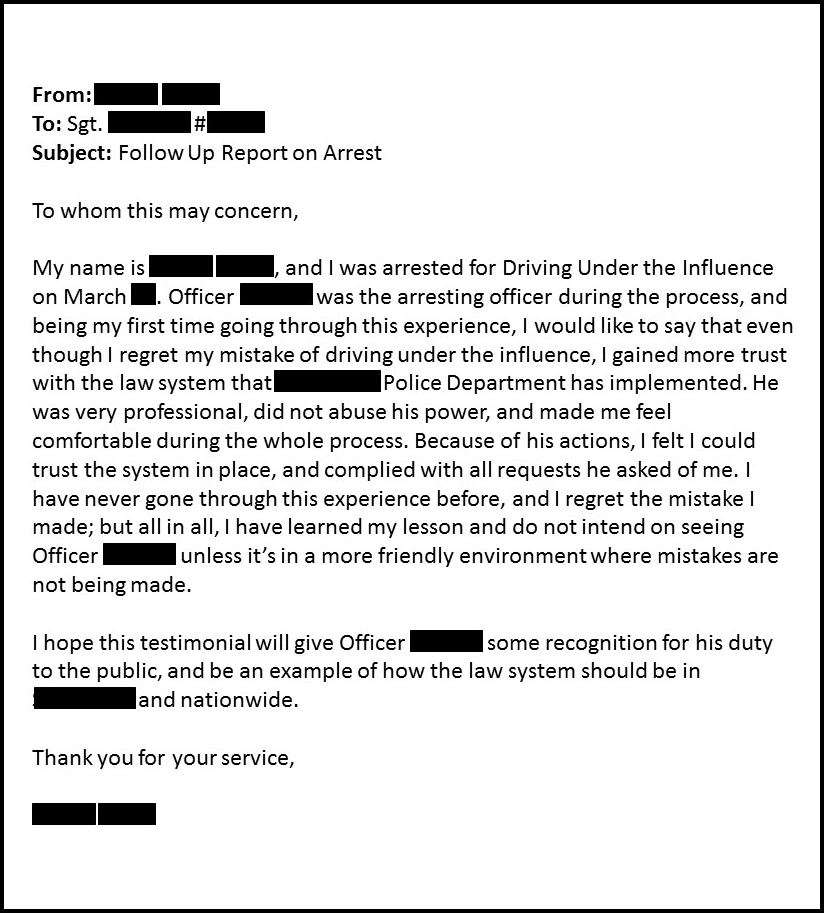
“Leadership is not a license to do less. Leadership is a responsibility to do more.” (Simon Sinek) The results of your leadership, no matter how hard you work, cannot be easily measured. But every now and then you receive something like the letter below and know that all of the effort that has been put into leading your officers is worth it. These are the rewards of positive law enforcement leadership.

The names of the subject, officer, and police department have been removed for privacy.

Letter

One final note regarding a leadership reward of this nature. Always be sure to appropriately recognize, reward, and promote the officer that earned this kind of respect from a subject they arrested. Recognize them by reading the letter in front of their squad mates and reward them with whatever means your department provides or you have developed within the squad. Promote the officer by forwarding the letter up the chain of command so their name gets attributed appropriately to this type of excellence.

The mission at Thin Blue Line of Leadership is to inspire law enforcement leaders to be better than they were yesterday. Positive leadership and creating a positive squad culture are on-going commitments that must be nurtured and developed over time by anyone in a law enforcement leadership position.

Share your thoughts or comments with us below or on our Facebook page. Continue saving the world one call at a time and as always, LEAD ON!
The 10 Law Enforcement Leadership Commandments

The mission at Thin Blue Line of Leadership is to inspire law enforcement leaders to be better than they were yesterday. Sharing positive leadership tactics and creating a positive law enforcement culture are on-going commitments that must be nurtured and developed over time by anyone in a law enforcement leadership position.

Here are 10 Law Enforcement Leadership Commandments . . .

  1. Emphasize good culture over rules. Good culture will take care of the rules.
  2. Create and train your officers to be the next leaders of the organization. Develop them through mentorship.
  3. Remember your “why” and share it often. Also know your officers’ “why” and don’t let them forget it.
  4. Your officers will only be as good as they are trained to be. Under stress they will default to their lowest level of understanding.
  5. Emphasize the value in doing the right thing at the right time for the right reasons.
  6. Teach your officers not to operate in fear. Fear breeds hesitation.
  7. Recognize, reward, and promote good police work as a matter of routine.
  8. Be purposeful in your briefings. Don’t let the little time you have with the whole squad go to waste.
  9. Create influence through contact, communication, and connection. Then you will get their contribution. Get out of the office and handle some calls with them.
  10. You will succeed the most through your officers succeeding. Don’t put personal gain above their needs.

Have something that you would have added to this list? Share your thoughts or comments with us below or on our Facebook page. Continue saving the world one call at a time and as always, LEAD ON!

Commandments