
KEY POINTS PREVIOUSLY DISCUSSED ABOUT LEADERSHIP ACCOUNTABILITY
Accountability is the actions, attitude, and effort necessary to merge expectations with performance.
Understanding who controls the expectations and who controls the performance is key to understanding leadership accountability.
Leadership accountability is all about ME. It start with ME. It sustains with ME. It grows with ME. It can be ended by ME. My ACTIONS, ATTITUDE, and EFFORT.
Before I can even begin to discuss control versus influence, we must be on the same page regarding the Dynamics of Human Interactions. Whether we are discussing leadership accountability, a use of force situation, handling a “routine” call for service, or any other leadership situation, the same three components always come into play.
As a leader, I must understand these dynamics in order to truly comprehend what I control and what I influence in the world around me. The most significant mistakes ever made in leadership commonly originate from the leader attempting to control something they do not truly have control over. If they had merely asked themself, “How can I influence this?” interaction with this other person or circumstance, the situation may have turned out much differently.
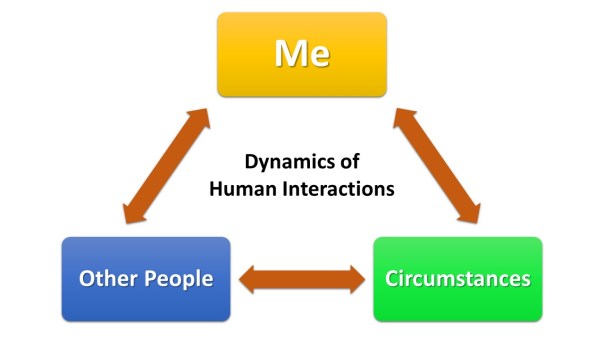
In every interaction we have as human beings, there are three basic components: ME, OTHER PEOPLE, and the CIRCUMSTANCES that bring us together.

Of these three components, it is vital that I recognize and understand there is only one of these that I have true control over – MYSELF. I cannot control other people and I cannot control the circumstances that brought everything together. So, within myself, the things I truly have control over are my actions, my attitude, and my effort.
- What actions do I have the ability to take? Options?
- What attitude is the best approach for the situation?
- How much effort is necessary to properly handle this situation?
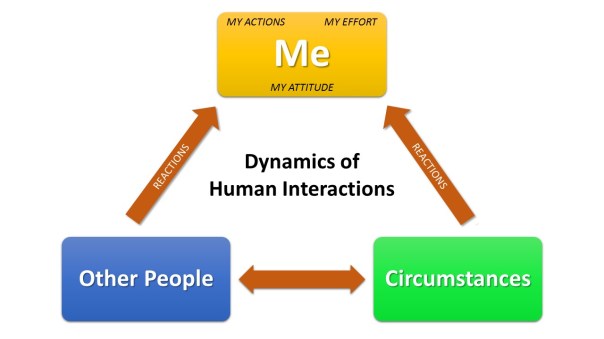
If I take responsibility for and own my actions, attitude, and effort, then I also have to accept that I control my Reactions to the external components of these Dynamics of Human Interactions. As information comes in from Other People, Circumstances, and their Interactions, I must accept that I have NO control over them at all. I initially can only control my reactions to the information coming in about them through the actions, attitude, and effort I CHOOSE to respond with.
But, this is not easy. I, as a human being, am an emotional and reactional creature by nature. It has been programmed into me over thousands of years to survive. Sometimes those survival instincts are beneficial and sometimes they are not. When my survival instincts tell me to strike back quickly, act in a manner that is solely based upon self-preservation, and is the path of least resistance, then I must find a way to freeze the moment and remember what I control. This is especially true in leadership situations.

I must accept I cannot CONTROL Other People, Circumstances, and their Interactions. As a leader, I must also accept I can INFLUENCE them. By recognizing that my actions, my attitude, and my effort are the tools I possess to positively influence them, I can begin to see leadership situations in a much different light. The greater my influence, the greater my leadership. The greater my leadership, the more vital it becomes for me to act consistently to maximize my influence.

How do I maximize my influence in regards to leadership accountability? I practice personal accountability myself day in and day out by controlling that which I control. I set clear expectations that provide a vision of the future, not just repeat rules and policies. I provide training, instruction, coaching, counselling, and mentoring. I discipline when necessary to educate, not punish. Finally, I recognize good work and positively reinforce it every chance I get. All of these are methods for me to influence those I lead and the circumstances I am a part of through my actions, my attitude, and my effort.
Whenever I find myself feeling stress while handling a situation of leadership, I simply hit my mental pause button and change the internal question I am asking myself from “How can I control this?” to “How can I influence this?” Suddenly, the feelings of stress and anxiety begin to dissipate and I begin working with what I control – MYSELF.
The mission at Thin Blue Line of Leadership is to inspire law enforcement supervisors to be the best leaders they can be by providing positive leadership tactics and ideas. Positive leadership and creating a positive squad culture are on-going commitments that must be nurtured and developed over time. Thin Blue Line of Leadership is here to help.
Please do not hesitate to contact us if you have ideas to share or suggestions for improvement. Your thoughts or comments on this blog are always appreciated either below or on our Facebook page. You can also follow us on Twitter at @tbl_leadership.
Continue saving the world one call at a time and as always, LEAD ON!

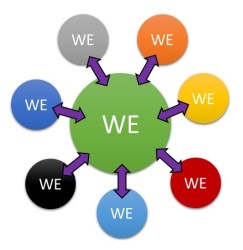
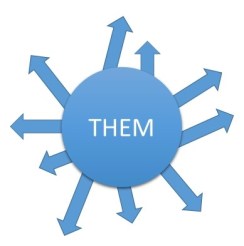 The second myth of accountability is that accountability is only something I do to other people. Specifically, the people that work on my squad or unit. If my view is that accountability is an external process of me holding others to my expectations or those of the department, then I am creating a culture of “them” and “they.” With this idea of accountability, I believe I must hold them accountable at all times and attempt to control their performance towards my expectations. This often comes across as micromanaging to those being led and to me it feels as if my entire job has become running around putting out fires all day. To those I am holding accountable, their perspective becomes one of contempt and I have now become part of the infamous “they.” The generic pronoun used to describe those higher in power within an organization when we feel there is not a choice in whatever matter is at hand. Ultimately, this style of accountability is only sustainable for as long as the leader can manage the energy to keep it up and are physically present around those they are “leading” to enforce their expectations. Once the leader becomes too tired to keep it up, they retract to the confines of their office to hide because they just cannot manage the level of effort required to constantly hold six to eight people constantly accountable. Worst of all is that none of those on the squad or unit have ever learned how to hold themselves accountable to these expectations because the boss has always done it for them.
 The truth about leadership accountability is that it is all about ME. It starts with ME. It sustains with ME. It grows with ME. It can be ended by ME. The concept of anything in leadership being “all about me” is a colossal departure from 99.9% of what I read and hear about good leadership, but when it comes to leadership accountability it truly is controlling MY actions, MY attitude, and MY effort that dictate my application of accountability. Leadership accountability is an inside out process. It is through internal accountability that I set the proverbial bar or expectations. Those I am leading see what I am doing, how I am doing it, and most importantly I explain why I am doing what I am doing. As the example is set, then I have earned the right to set external expectations of those I am leading because they know that I am not and never would ask them to do something I am not doing or willing to do myself. In other words, I must exemplify accountability before I can ever expect it from those I lead – that is leadership accountability.
 Thin Blue Line of Leadership