Category Archives: Training

Praising Properly: Intelligence vs. Effort

In a controlled study, a group of fifth grade students were each given a puzzle to solve. Half of the students who solved the puzzle were praised for being smart. The other half who solved the puzzle were praised for the high level of effort they gave. The students were then given the option to select another puzzle of their choice. One puzzle was similar in difficulty to the one they had completed successfully and the other one was significantly more difficult. The students were told they probably would not solve the more difficult puzzle, but would learn more from trying to solve it.

What puzzle do you think the “smart” kids chose?

What puzzle do you think the “effort” kids chose?

A majority of the students who were praised for being smart picked the easier puzzle. 90% of the students praised for their effort picked the difficult puzzle. Why do you think that is?

The study concluded that when we praise strictly for intelligence or correctness, the students got the message that being “smart” or “correct” is the key to winning the game. Therefore, they choose easier tasks to complete to keep the praise coming while avoiding new or difficult tasks. This is common because intelligence is typically perceived to be out of our control. Since it is outside our control, being viewed as “not smart” or “incorrect” gives the student no way to respond to potential failure because they see themselves as a victim of their supposed limited intelligence.

When praise for intelligence/correctness has been the primary method of praise, you will hear excuses like “I haven’t been taught that,” “That isn’t the way I was shown before,” and “That isn’t how I learn.” All of these excuses are made from a victim mentality and are a self-preservation technique to keep from feeling dumb/embarrassed for being incorrect. Notice how each of the statements point the blame for the failure away from the student.

However, when we emphasize praise primarily for effort, the students see learning as a variable they can control. They may have been incorrect in the knowledge or action, but praising them for taking on the task and putting forward their best effort leads to more learning. This also gives them a simple solution for responding to failure – PUT IN MORE EFFORT!

When we routinely praise for effort, you will hear student questions like, “How can I do better?,” “Could we try this next?,” and “Can we do that again?” All of these questions show the student taking responsibility for learning and having a willingness to put in more effort.

Success at learning is less dependent on intelligence than it is on grit, curiosity, and effort. The essential ingredients to creating great police officers during training are providing them with challenges, praising their effort while handling them, and then teaching them how to overcome those challenges. The rest is up to the learner and their EFFORT.

The mission at Thin Blue Line of Leadership is to inspire law enforcement supervisors to be the best leaders they can be by providing positive leadership tactics and ideas. Positive leadership and creating a positive squad culture are on-going commitments that must be nurtured and developed over time. Thin Blue Line of Leadership is here to help.

Please do not hesitate to contact us if you have ideas to share or suggestions for improvement. Your thoughts or comments on this blog are always appreciated either below or on our Facebook page. You can also follow us on Twitter at @tbl_leadership.

Continue saving the world one call at a time and as always, LEAD ON!

*** Parts of this blog were paraphrased from the excellent book “Make it Stick” by Peter C. Brown with some of my own additional thoughts. I highly recommend this book to all trainers. ***

Control vs. Influence

KEY POINTS PREVIOUSLY DISCUSSED ABOUT LEADERSHIP ACCOUNTABILITY

Accountability is the actions, attitude, and effort necessary to merge expectations with performance.

Understanding who controls the expectations and who controls the performance is key to understanding leadership accountability.

Leadership accountability is all about ME. It start with ME. It sustains with ME. It grows with ME. It can be ended by ME. My ACTIONS, ATTITUDE, and EFFORT.

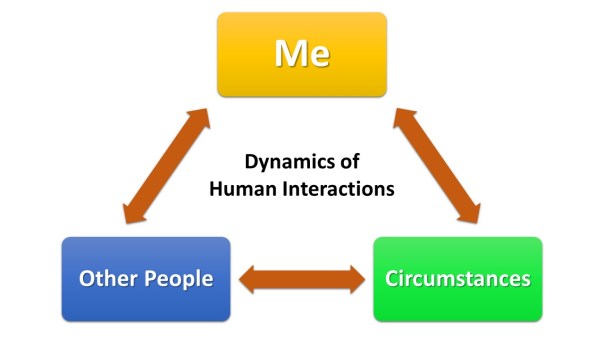
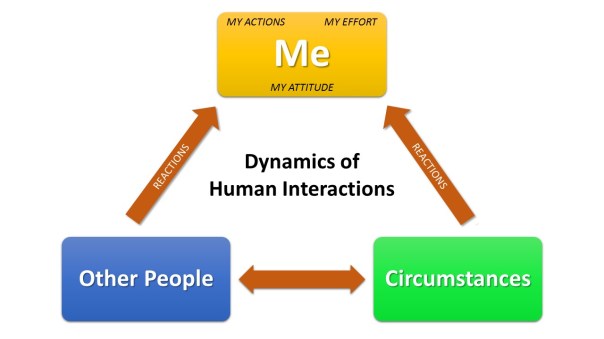
Before I can even begin to discuss control versus influence, we must be on the same page regarding the Dynamics of Human Interactions. Whether we are discussing leadership accountability, use of force situations, handling a “routine” call for service, or any other leadership situation, the same three components always come into play.

As a leader, I must understand these dynamics in order to truly comprehend what I control and what I influence in the world around me. The most significant mistakes ever made in leadership commonly originate from a leader attempting to control something they do not truly have control over. If they had merely asked themself, “How can I influence this?” interaction with this other person or circumstance, the situation may have turned out much differently.

Slide9

In every interaction we have as human beings, there are three basic components: ME, the OTHER PEOPLE involved, and the CIRCUMSTANCES that bring us together.

Slide10

Of these three components, it is vital that I recognize and understand there is only one of these that I have true control over – MYSELF. I cannot control the other people that are involved and I cannot control the circumstances that brought everything together. So, within myself, the things I truly have control over are my actions, my attitude, and my effort.

  • What actions do I have the ability to take? Options?
  • What attitude is the best approach for the situation? Mindset? Role?
  • How much effort is necessary to properly handle this situation successfully?

Slide11

If I take responsibility for and own my actions, attitude, and effort, then I also have to accept that I control my Reactions to the external components of these Dynamics of Human Interactions. As information comes in from Other People, Circumstances, and their Interactions, I must accept that I have NO control over them at all. I can only control my reactions to the information coming in through the actions, attitude, and effort I CHOOSE to respond with.

But, this is not easy. I, as a human being, am an emotional and reactionary creature by nature. It has been programmed into me over thousands of years to survive. Sometimes those survival instincts are beneficial and sometimes they are not. When my survival instincts tell me to strike back quickly, act in a manner that is solely based upon self-preservation, and is the path of least resistance, then I must find a way to freeze the moment and remember what I control. This is especially true in leadership situations.

Slide12

I must accept I cannot CONTROL Other People, Circumstances, and their Interactions. As a leader, I must also accept I can INFLUENCE them. By recognizing that my actions, my attitude, and my effort are the tools I possess to positively influence them, I can begin to see leadership situations in a much different light. The greater my influence, the greater my leadership. The greater my leadership, the more vital it becomes for me to act consistently to maximize my influence.

Slide13

How do I maximize my influence in regards to leadership accountability? Practice personal accountability day in and day out by controlling that which I can control. I can set clear expectations that provide a vision of the future, not just repeat rules and policies. I can provide training, instruction, coaching, counselling, and mentoring. I discipline when necessary to educate, not punish. Finally, I recognize good work and positively reinforce it every chance I get. All of these are methods are ways for me to influence those I lead and the circumstances I am a part of through my actions, my attitude, and my effort.

Whenever I find myself feeling stressed while handling a leadership situation, I hit my mental pause button and change the internal question I am asking myself from “How can I control this?” to “How can I influence this?” Suddenly, the feelings of stress and anxiety begin to dissipate and I begin working the problem using what I can control – MYSELF.

The mission at Thin Blue Line of Leadership is to inspire law enforcement supervisors to be the best leaders they can be by providing positive leadership tactics and ideas. Positive leadership and creating a positive squad culture are on-going commitments that must be nurtured and developed over time. Thin Blue Line of Leadership is here to help.

Please do not hesitate to contact us if you have ideas to share or suggestions for improvement. Your thoughts or comments on this blog are always appreciated either below or on our Facebook page. You can also follow us on Twitter at @tbl_leadership.

Continue saving the world one call at a time and as always, LEAD ON!

10 Tips for New Sergeants

For the last 8 years, I have been a Field Training Sergeant. It is truly a pleasure knowing that I am having an impact on the future of my police department by training these new leaders. I see this responsibility as a vital one. If I do not do a good job, I am not just affecting that new sergeant, but every officer that serves on his or her squad.

Just so we are on the same page, here is how my department handles sergeant training. Sergeant field training is a 5 week process – 2 weeks with one training sergeant, 2 weeks with a different training sergeant, and then one final week back with the first training sergeant. At the end of each shift, the Field Training Sergeant completes a daily observation report (similar to FTO) that summarizes and scores everything the prospective new sergeant did throughout that shift. While writing these daily observation reports, I have noticed that there are certain bits of advice that I seem to be repeatedly writing for every sergeant I help train.

So, here are my 10 tips for new sergeants . . .

  1. Successful sergeants spend 80% of their time working with people and 20% doing everything else. Sergeants that fail to inspire, have a poor squad culture, and breed negative officers focus more on everything else rather than people and building relationships.
  2. Successful sergeants find ways to teach their officers to be adaptive decision-makers; not robots that only understand how to solve problems with checklists. When opportunities present themselves, sergeants explain their process for making difficult decisions and everything they took into account. Then, when their officers face similar situations they have been taught to apply their own similar process.
  3. Successful sergeants never waste briefing time. There is always something that could be discussed, debated, trained, or learned in briefing. This is one of the few opportunities when sergeants have their entire squad’s attention at the same time; make the most of it.
  4. Successful sergeants understand that policing is a complicated profession. Both sergeants and their officers are going to make mistakes at some point. Do not hide mistakes, share them openly and turn them into learning opportunities focused on improvement. Mistakes are fine, just don’t make the same one twice.
  5. Successful sergeants recognize, reward, and promote good police work by their officers. They use whatever methods are available at their department to make this happen anytime an officer goes above and beyond. Not only does this create a more positive culture, but it also spurs on more officers to look for opportunities to go above and beyond. What a sergeant rewards will be repeated.
  6. Successful sergeants have a vision of the culture they want to have on their squad. Squad culture is defined as the conglomeration of your officers’ actions, attitude, and effort. If you asked another sergeant to describe your squad in 4 words, what words would they use? That is your culture. If you don’t like those words, do something about it.
  7. Successful sergeants do not lead from their desks. They get out on the road with their officers and find ways to serve them throughout each shift. They never believe themselves to be too good for the “grunt” work of being a patrol officer; they get in there and get their hands dirty occasionally.
  8. Successful sergeants recognize that their actions, attitude, and effort tell their officers what is important to them. If a sergeant speaks negatively about their schedule, some situation at the department, or some aspect of the job, then don’t be surprised when the officers have that same opinion or are representing that opinion openly. Negativity breeds negativity.
  9. Successful sergeants know what they do not know, then they find ways to compensate for those areas. If they are not good at tactical situations, they talk to the department’s SWAT officers about various scenarios and how they would handle them. If they are not good at traffic or investigations, they build relationships with motors or detectives that are respected. The most important aspect of this tip is that a sergeant never fakes knowledge and gives bad advice to an officer. This will kill their credibility. If an officer has a question that the sergeant does not know the answer to, the best thing they can do is say, “That is a great question, I don’t know, but I know someone who will. Standby and I’ll call you right back.”
  10. Successful sergeants never allow themselves or their officers to stop learning. The minute a sergeant thinks they know it all is the moment they begin sliding towards mediocrity. A sergeant values training and realizes that the more training they can get for their officers, the better their officers will be on the road.

Got a tip you would give to a new sergeant?

The mission at Thin Blue Line of Leadership is to inspire law enforcement supervisors to be the best leaders they can be by providing positive leadership tactics and ideas. Positive leadership and creating a positive squad culture are on-going commitments that must be nurtured and developed over time. Thin Blue Line of Leadership is here to help.

Please do not hesitate to contact us if you have ideas to share or suggestions for improvement. Your thoughts or comments on this blog are always appreciated either below or on our Facebook page. You can also follow us on Twitter at @tbl_leadership.

Continue saving the world one call at a time and as always, LEAD ON!
Loeb’s Rules of Medicine Applied to Law Enforcement

I came across an interesting retweet this week from a friend that happens to be an emergency room doctor. This is where I read Loeb’s Rules of Medicine for the first time and immediately felt they had multiple connections to law enforcement and leadership.

Robert F. Loeb (1895 – 1973) was a well-respected physician and professor at Columbia University Medical School. Dr. Loeb offered a simple set of four rules to cut through the complicated nature of being a physician. Here they are…

Loeb’s Rules of Medicine

  1. If what you are doing is working, keep doing it.
  2. If what you are doing isn’t working, stop doing it.
  3. If you don’t know what you are doing, do nothing.
  4. Never make the treatment worse than the disease.

As I read these rules, they got me thinking of their applications to policing of which I could think of many. But the most appropriate application that struck me was how we, as law enforcement leaders, should be handling critical incidents. Critical incidents are complex situations involving witnesses, victims, suspects, and officers all experiencing various overlapping states of volatility, uncertainty, chaos, and anxiety. All of these individuals have been brought together by the one thing they have in common, the circumstances of the particular situation.

How the law enforcement leader leads these situations not only influences and affects the officers that work with them, but also leaves a lasting impact on the witnesses, victims, and suspects involved. That impact can be a positive one in which those involved feel like the situation was made better by the presence of law enforcement. Or it can be a negative one in which the presence of law enforcement only served to make the situation worse.

So, as we head into these critical incidents, it is vital to understand what the appropriate role is for law enforcement to play, what our priorities are, and what our range of acceptable outcomes is for the particular situation. Knowing and having an understanding of these three things emphasizes good practice and process while also taking into account the range of acceptable outcomes. As we begin to apply what we believe to be the correct role and priorities for those responding, that is where the connections to Loeb’s Rules of Medicine really start to come into play.  They help create a mindset of adaptability in the leader’s actions, attitude, and effort regarding the handling of the critical incident and steer them away from the perspective that there is only a single solution to these complex events.

Loeb’s Rules of Medicine Applied to Law Enforcement

RULE# 1: If what you are doing is working, keep doing it. Consistently assessing the impact of our decisions as we lead critical incidents is vital. If we are going in a certain direction and it is working toward the already identified acceptable range of solutions, then keep pushing forward so long as appropriate practices and processes are being applied. This can be accomplished by understanding the hierarchy of life and applying it correctly for the benefit of all involved. Then looking to stabilize the situation as much as possible while continuing to work towards a solution to the issue at hand. The key is continuous evaluation. Just because something is working now, does not guarantee it will still be working 5 minutes from now. That is the very nature of a complex critical incident.

RULE# 2: If what you are doing isn’t working, stop doing it. In contrast to Rule #1, the minute we identify what we are doing is not working, then we must be willing to stop…and adjust. Law enforcement does not have the luxury to just stop, so adapting is key. We know when our actions in a critical incident are not working because we start to internalize the building stress and pressure of the situation. We begin to think in terms of control when we should be thinking in terms of influence. We focus more on trying to control the other people involved and/or the circumstances of the situation rather than the things we truly have control over. So, when we begin to feel overwhelmed by the demands of the situation, we need to stop and adapt by asking what are the actions I can adjust, what is a better attitude to approach this situation with, and what is the effort level needed for success. Obviously, something is not working, so control what you can control and influence all of the rest.

RULE# 3: If you don’t know what you are doing, do nothing. No law enforcement leader ever wants to admit they do not know what they are doing – there is just too much pride, ego, and reputation on the line for that to happen, right? But this is exactly what we need to be able to do, especially if we want to call ourselves leaders. We need to be able to admit to and identify our areas for improvement, especially in regards to handling critical incidents, prior to finding ourselves in the moment of running one. This is the only way we can work towards minimizing the likelihood of the “I don’t know what I’m doing” moment. The world of handling critical incidents is unpredictable and complex. If we find ourselves in a moment when we do not know what we are doing, then we must know the resources that are available and how to best utilize their strengths to accomplish what we cannot because in these critical incidents we cannot just do nothing.

 RULE #4 (Adapted): Never make the situation worse by our presence. Law enforcement was called to the critical incident for a reason, it is already a bad day for those involved. We must account for our actions, attitude, and effort with every decision we make to continually be moving towards both solving and stabilizing the situation. To stabilize the situation means to prevent it from getting worse and make it as safe as possible to work in for all involved. This could be setting containment, evacuations, road closures, calling in additional resources, and many other available options. If we find it necessary to momentarily de-stabilize a situation, then it must be done deliberately and with an intentional purpose. A momentary destabilization could be the use of a flashbang, deploying gas/smoke, breaking out a window, breaching a door, or making a crisis entry. These are all momentary de-stabilizations of the incident that must be justified by a priority higher than stabilization such as saving life.

Where else do you see Loeb’s Rules of Medicine applying to law enforcement?

The mission at Thin Blue Line of Leadership is to inspire law enforcement supervisors to be the best leaders they can be by providing positive leadership tactics and ideas. Positive leadership and creating a positive squad culture are on-going commitments that must be nurtured and developed over time. Thin Blue Line of Leadership is here to help.

Please do not hesitate to contact us if you have ideas to share or suggestions for improvement. Your thoughts or comments on this blog are always appreciated either below or on our Facebook page. You can also follow us on Twitter at @tbl_leadership.

Continue saving the world one call at a time and as always, LEAD ON!

A Unique Sergeant Process

As a sergeant in my department’s training unit, one of my duties is the coordination and implementation of our Sergeant Testing Process. Over the last 4 years, I have been a member of the team tasked with the development of this unique process. Our overall goal is to identify and promote the department’s best leaders.  Here is an outline of how we are doing that…

  1. Department Leadership Development Program

We began by creating a leadership development program for anyone even remotely interested in possibly promoting within the department. Sworn or non-sworn, all are welcome to attend, learn, and discuss leadership from a law enforcement perspective. We offer 2 classes per month focusing on topics such as building teams, leadership accountability, ethical leadership, building influence, and many others. These are highly interactive courses designed to assist the attendees in developing their own unique leadership philosophy and not shoving one particular style down their throats. While being a part of this program is not mandatory for those interested in promoting to sergeant, it does provide an item for the resume and also exposes them to multiple perspectives of law enforcement leadership which greatly helps with later pieces of the Sergeant Testing Process. Approximately 75% of the people that we promote to sergeant were a part of this program.

  1. Sergeant Testing Process Announcement

The announcement for the Sergeant Testing Process comes out 6 months prior to the expiration of our current sergeant promotional list. The entire Sergeant Testing Process is a lengthy one which requires those interested in testing to be dedicated to the idea of promoting to sergeant. This helps to remove those “I’ll just throw my hat in the ring and see what happens” type people from trying to promote. This announcement spells out every one of the following steps in detail so the expectations are clear.

  1. The Written Test

Having a written test is nothing unique to any other Sergeant Testing Process, but it is only the beginning of our process. Our test is 50 multiple choice questions and designed to verify that those continuing in the process have a minimum baseline of knowledge and the ability to apply state law, policy/procedure, and case law. Where our test becomes unique is that the majority of the questions are patrol scenario-based. We are not looking for memorizers, we are looking for those that can apply their knowledge. All of the scenarios are real-world situations that have happened to current patrol sergeants and required the sergeant to know the answer “off the top of their head.” The tests are validated by having our current patrol sergeants take the test and utilizing an average of their scores to create the passing score. If a candidate does not meet the minimum passing score, then they are done with this process.

  1. The Standardized Resume

For the candidates that pass the written test, they must submit a standardized resume. This resume is designed to have the same sections of information, font, available space, and overall appearance for each candidate. This reduces the positive or negative style factors that can sometimes play a role when reviewing multiple resumes. Because all of these standardized resumes look alike, focus can be maintained on the information contained within. Our standardized resume highlights positions of leadership and contributions made to the department by providing specific space for sharing information regarding being a Field Trainer, General Instructor, and initiative taken to prepare for this process. These pieces of the resume go beyond just yes/no that it was done and asks for information about their last four trainees and what classes they have taught. The standardized resume is then made available throughout the remainder of the Sergeant Testing Process.

  1. Lieutenant Panel Interview

After passing the written test, the next step in the process is to participate in a Lieutenant Panel Interview. Our panel consists of three patrol lieutenants. They review each candidate’s standardized resume prior to the oral board. Questions on the oral board focus on leadership, emotional intelligence, tactical knowledge, and the transition to becoming a sergeant. There is no specific number for how many candidates can pass this part of the process. The goal for the Lieutenant Panel Interview is to assess who is ready to lead. The passing candidates will be taught the job of being a sergeant; it is leadership that is much more difficult to learn once promoted. Over the last 4 years, approximately 50 – 60% of the applying candidate make it through to the next step.

  1. Basic Sergeant School

Those that make it through the Lieutenant Panel Interview attend a week long Basic Sergeant School. The school consists of 12 topics of instructions that are presented by our in-house experts. Everything from emergency response strategy to payroll to mental health to patrol sergeant admin tasks gets covered. Because the focus of the process so far has been identifying leaders, we are able to focus the school on these more managerial topics and not waste time trying to teach leadership ineffectively. The Basic Sergeant School provides detailed knowledge of a sergeant’s job so when candidates begin field training they can combine and apply this knowledge and their leadership from the beginning. Each day of the school ends with a discussion panel. Panels in our most recent school included groups of Detective Supervisors, Lieutenants, New Patrol Sergeants, and Patrol Support Supervisors. Each of these panels provided an open forum for the candidates to asked questions of each unique group and also to assist them in developing their own network of department resources.

  1. Sergeant Field Training

It is during Sergeant Field Training that we learn who is and who is not ready to be a patrol sergeant. Each candidate goes through a 5 week Sergeant Field Training period. They are not promoted, but are given sergeant chevron pins for their collars so they stand out from a standard patrol officer. There are three phases and the candidates will spend time with 2 different patrol sergeants. The candidates essentially become the sergeant for the squads they are assigned with the Sergeant Field Trainer there to assist, coach, teach, and mentor them through learning the job of being a patrol sergeant. The Sergeant Field Trainers help them learn to apply the knowledge they were taught in the Basic Sergeant School. Each day, a Daily Observation Report (DOR) is completed and they are scored. At the end of each phase, both the Sergeant Field Trainer and their assigned Lieutenant write a Phase Summary Report that discusses the candidate’s ability to lead, manage the job, and handle any emergency traffic or significant investigations they were involved in. If a candidate cannot manage to perform the tasks of a patrol sergeants, they can be removed from the program at this point in the process. One of the most significant benefits of doing sergeant field training before promoting a candidate is that they can simply return to their current assignment if it is discovered that being a sergeant is not for them.

  1. Chiefs Oral Board

After Sergeant Field Training, all of the documentation regarding their performance is collected along with their Standardized Resume and a packet is created for each candidate. These packets are given to the Chief of Police and the two Assistant Chiefs of Police to review. After they have had sufficient time to review each candidate’s performance and information, the Chiefs Oral Board is schedule. The Chiefs ask a variety of questions related to the candidate’s learning and performance of the Patrol Sergeant position. From this oral board panel, the Chiefs create a ranked Promotional List.

  1. Auxiliary Sergeants

Because we have a ranked list of officers/detectives that have been trained in and shown proficiency at performing the duties of a patrol sergeant, we have also created a pool “auxiliary sergeants.” They can be utilized (as their schedules permit) to assist in covering patrol squads whenever a squad’s sergeant is off/out of duty a week or longer. This could be due to a vacation, illness, or injury. As the candidates are waiting on the ranked list to promote, helping to cover patrol squads maintains the patrol sergeant skill set they learned during this process. While serving as an “auxiliary sergeant,” they are paid at the base hourly rate of a new sergeant. This creates a win all around for both the department and those waiting on the list to promote.

It is usually at this point in the discussion of this process that someone asks what happens if they do not promote off of the list. The ranked list is good for 1 year. If a candidate on that list does not promote within the year and they have filled in where opportunities were available as an “auxiliary sergeant,” then when the next process begins they will be able to skip all the way to the Chief’s Oral Board. In the Chiefs Oral Board, they will be able to discuss how they have performed as an “auxiliary sergeant” without the aide of a field trainer. If they have proven themselves to be a reliable “auxiliary sergeant,” then they usually find their way near the top of the next year’s ranked list.

Over the last 4 years, this process has consistently produced some of the best Sergeant Promotional Lists we have ever seen. The candidates are better prepared and more comfortable stepping in and taking on the role of being a patrol sergeant.

A few key details – This process is utilized in a department of approximately 400 sworn. It requires someone dedicated to its coordination and implementation, as well as, commitment from Human Resources and the entire Chain of Command.

If you have questions, feel free to ask. It is only due to the success of this process that I share it with you here at Thin Blue Line of Leadership.

The mission at Thin Blue Line of Leadership is to inspire law enforcement supervisors to be the best leaders they can be by providing positive leadership tactics and ideas. Positive leadership and creating a positive squad culture are on-going commitments that must be nurtured and developed over time. Thin Blue Line of Leadership is here to help.

Please do not hesitate to contact us if you have ideas to share or suggestions for improvement. Your thoughts or comments on this blog are always appreciated either below or on our Facebook page. You can also follow us on Twitter at @tbl_leadership.

Continue saving the world one call at a time and as always, LEAD ON!
Briefing with Purpose

“There are no secrets to success. It is the result of preparation, hard work, and learning from failure.” ~ Colin Powell

Success is absolutely about preparation, hard work, and learning from failure. As a leader of people, you have taken on the challenge of doing everything within your power to make your people successful. One of the best places to start doing that with your officers is in the briefing room. In law enforcement, the time that you get to spend with your entire squad together is extremely limited; therefore, it is up to you to make the most of it.

In my department, each patrol shift starts with a 30 minute briefing led by the squad sergeant. This is the only time that the squad has the opportunity to be together in same place at the same time without the next call for service pulling us away. (Most of the time.) There are many purposeful activities that can fill this time, but unfortunately they often just turn into “bull sessions” with no real purpose and become a waste of everyone’s time. Don’t get me wrong, there is a time and a place to have unplanned, open discussions in briefing so long as there is a purpose to it and it is not just a default due to a lack of planning on the part of the supervisor.

Prior to being a police officer, I was a math teacher for just shy of 7 years. I was educated on the importance of lesson planning, building themes, identifying “teachable” moments, and organizing curriculum. When you walk into a classroom of 30+ teenagers every day, you quickly come to understand how important organization is to facilitating effective learning. When I promoted to sergeant, these same lessons came flooding back to me and I found ways to modify the concepts to work within the given 30 minute briefing times I had.

As a patrol sergeant, I work four 10 hour shifts a week. I try to stay at least one week ahead with whatever I am planning for briefing training so I have some idea of where I am going and have time to gather resources or create them. With that being said, it is vital to not be overly rigid in the briefing plan because things occasionally come up that may take precedent; such as a major call for service that needs to be discussed that offers some “teachable” moments. Below is an example of the form I used to plan my briefings . . .

lesson

Here was the thinking behind how my weekly planning was organized. DAY 1 was typically reserved for administrative topics. All of the emails, criminal info bulletins, policy updates, and more that needed to be to be shared with the whole squad were saved over the weekend for this day. The last thing I ever wanted was for administrative stuff to take over all of my briefings. I also found that the first day back to work for the week was usually not the best day for conducting briefing training. Once the admin stuff was out of the way, then I would end the briefing by recognizing some of the good work from the week before to start us off positively. This recognition was with the express intent of wanting to see those specific actions, attitudes, or efforts repeated by the squad.

DAY 2 and DAY 3 were reserved for Briefing Training. These could include any number of topics and may involve bringing in a guest speaker from another part of the department, using a short PowerPoint, leading a discussion on our successes/failures from a call, conducting a demonstration, putting together a scenario, watching a police-related video then discussing how it relates to our policies/practices/state laws, etc. There are so many great topics and activities related to our profession that can fit into a 30 minute time period to instigate learning and/or create culture. Ultimately, when planning briefing training, we are not trying to certify officers in anything, just share information so we are all on the same page.

DAY 4 was usually more relaxed. I would lead a discussion called “What did you learn?” in which each member of the squad would talk about one thing they learned or did differently this week on a call and if it was or was not successful. Finally, I would always end the last briefing of the week by recognizing some more of the fine work that had been done by my officers that supported our positive squad culture. There would also be an opportunity for them to recognize each other for things I may not have seen.

At the bottom of the weekly plan was a list of all of my officers. This gave me the ability to know who was or was not in briefing on a given day so either myself or an informal leader on the squad could follow up with them later regarding what we covered. As mentioned above, the power of having briefings with purpose comes from everyone being on the same page. Without this follow-up, you fall short on one of the best parts of having organized briefing plans.

With purpose, there is power. Time with the entire squad together allows a leader to communicate specific messages that puts everyone on the same page. This creates opportunities to share the mission, build squad culture, recognize good work, educate on policy/legal updates, discuss success/failures, and much more. Having these types of purposeful briefings are especially beneficial for newer officers, but also serve the purpose of being a reminder to the more senior officers about what is important.

I challenge you to find the time and make the effort to plan briefings with purpose and see the many positive benefits that come from it.

The mission at Thin Blue Line of Leadership is to inspire law enforcement supervisors to be the best leaders they can be by providing positive leadership tactics and ideas. Positive leadership and creating a positive squad culture are on-going commitments that must be nurtured and developed over time. Thin Blue Line of Leadership is here to help.

Please do not hesitate to contact us if you have ideas to share or suggestions for improvement. Your thoughts or comments on this blog are always appreciated either below or on our Facebook page. You can also follow us on Twitter at @tbl_leadership.

Continue saving the world one call at a time and as always, LEAD ON!

TBLL – Leadership Reading List

Culture can be nurtured within a law enforcement organization in a number of different ways. I have been fortunate to have multiple opportunities to positively affect my department’s culture by being involved in the Field Training Officer (FTO) Program, as a trainer of Field Training Officers, as a Sergeant, as a Sergeant Field Trainer, and by assisting in the develop of our department’s leadership-based sergeant selection process. All of these opportunities have enabled me to develop a level influence within the culture of the department that I take very seriously. So, when I was asked by a sergeant test candidate what has influenced my personal leadership style and what resources I have used to develop the material that comes out on Thin Blue Line of Leadership, I decided to provide my recommended leadership reading list.

These books have been vital in the development of Thin Blue Line of Leadership content, my own leadership style, my community interactions, how I operate within my department, and also how I operate with my squad of officers. I can vouch for the value in all of them as there are multiple concepts that I have implemented from each of the books listed below. If you are not a big reader or just do not have the time, all of these books can be purchased and listened to by using the Audible app on both Apple and Android devices. About half of these books I listened to while driving in to work and the rest were read the old fashioned way.

These books were all written from the perspective of the business world; not policing. Therefore, as I read each of them, I continually asked myself “How does this apply to policing?” and “How do I incorporate these ideas into my squad/department?” Then I molded the ideas I liked into my leadership style, community interactions, department interactions, and/or squad expectations. For two of these books I have written a law enforcement synopsis and those are linked in the book titles. I have also linked each book’s picture to Amazon in case you are inspired to buy any of the books mentioned.

In case you are wondering, I do not work for Amazon or any of these publishing companies. I simply want to share some good leadership knowledge with you. Enjoy . . .

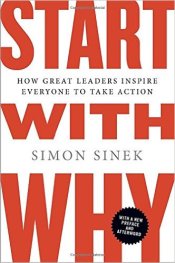
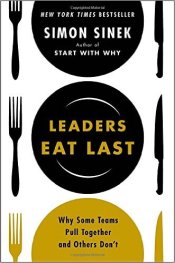
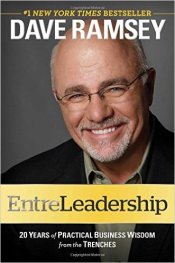
Start with Why     Leaders Eat Last     Entreleadership

Start with Why by Simon Sinek

Leaders Eat Last by Simon Sinek

Entreleadership by Dave Ramsey

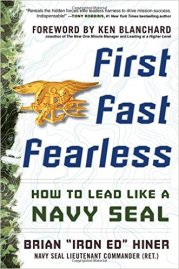
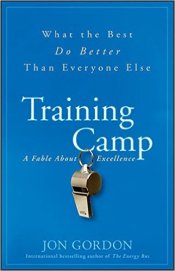
First fast fearless      Energy bus     Training Camp

First, Fast, Fearless by Brian Hiner (Ret. Navy Seal Lieutenant Commander)

The Energy Bus by Jon Gordon

Training Camp by Jon Gordon

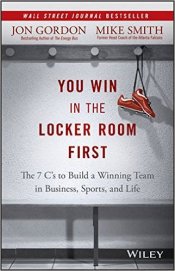
Hard Hat     Soup     You Win

The Hard Hat by Jon Gordon

Soup by Jon Gordon

You Win in the Locker Room First by Jon Gordon

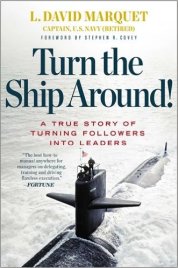
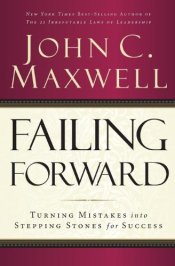
Turn Around     Failing-Forward     Miserable

Turn the Ship Around by David Marquet

Failing Forward by John C. Maxwell

The Three Signs of a Miserable Job by Patrick Lencioni

Five Dysfunctions     The ideal Team player     Good to GReat

The Five Dysfunctions of a Team by Patrick Lencioni

The Ideal Team Player by Patrick Lencioni

Good to Great by Jim Collins

Currently I am reading “Building Shooters: Applying Neuroscience Research to Tactical Training System Design and Training Delivery” by Dustin P. Salomon and believe that it will soon be at the top of this list. I truly hope you get as much out of each of these books as I did. Please let me know if you have any reading suggestions for me and I’ll check them out.

The mission at Thin Blue Line of Leadership is to inspire law enforcement supervisors to be the best leaders they can be by providing positive leadership tactics and ideas. Positive leadership and creating a positive squad culture are on-going commitments that must be nurtured and developed over time. Thin Blue Line of Leadership is here to help.

Please do not hesitate to contact us if you have ideas to share or suggestions for improvement. Your thoughts or comments on this blog are always appreciated either below or on our Facebook page. You can also follow us on Twitter at @tbl_leadership.

Continue saving the world one call at a time and as always, LEAD ON!

2 of 7 Core Values for Building a Team – Strive to be a Great Leader (Video)

Welcome to the Thin Blue Line of Leadership Blog. We’re going to continue with Core Value #2 of the 7 Core Values for Building a Team.

For my department, I created a leadership training based upon the TBLL Blog entitled, “7 Core Values for Building a Team.” Within this training were 7 short videos that utilized modified interviews from the EntreLeadership Podcast which were set to law enforcement related images and words. These videos served as an excellent starting point for discussion and debate over the 7 Core Values for Building a Team. The second video is from a lesson taught by Dave Ramsey for the EntreLeadership Podcast. It is focused on Core Value #2 – Strive to be a Great Leader.

Over the next few weeks, the other 6 related videos will be added. Please comment either here or on YouTube and let us know what you think. If you like the videos, we’ll look into doing more of them going forward.

The mission at Thin Blue Line of Leadership is to inspire law enforcement supervisors to be the best leaders they can be by providing positive leadership tactics and ideas. Positive leadership and creating a positive squad culture are on-going commitments that must be nurtured and developed over time and Thin Blue Line of Leadership is here to help.

Please do not hesitate to contact us if you have ideas to share or suggestions for improvement. Share your thoughts or comments on this blog below or on our Facebook page. You can also follow us on Twitter at @tbl_leadership.

Continue saving the world one call at a time and as always, LEAD ON!

1 of 7 Core Values for Building a Team – Start with Why (Video)

Welcome to the Thin Blue Line of Leadership Blog. We’re going to try something new this week and utilize the power of video.

For my department, I created a leadership training based upon the TBLL Blog entitled, “7 Core Values for Building a Team.” Within this training were 7 short videos that utilized modified interviews from the EntreLeadership Podcast which were set to law enforcement related images and words. These videos served as an excellent starting point for discussion and debate over the 7 Core Values for Building a Team. The first video is from an interview with Simon Sinek. It is focused on Core Value #1 – Start with Why.

Over the next few weeks, the other 6 related videos will be added. Please comment either here or on YouTube and let us know what you think. If you like the videos, we’ll look into doing more of them going forward.
The mission at Thin Blue Line of Leadership is to inspire law enforcement supervisors to be the best leaders they can be by providing positive leadership tactics and ideas. Positive leadership and creating a positive squad culture are on-going commitments that must be nurtured and developed over time and Thin Blue Line of Leadership is here to help.
Please do not hesitate to contact us if you have ideas to share or suggestions for improvement. Share your thoughts or comments on this blog below or on our Facebook page. You can also follow us on Twitter at @tbl_leadership.

Continue saving the world one call at a time and as always, LEAD ON!


Advanced Officer Training Day

“If you want something you’ve never had, then you’ve got to do something you’ve never done.”    ~ Thomas Jefferson

Recently, I participated in a testing process to become the supervisor of our police department’s Advanced Training Unit. This unit’s mission is to provide training on every major topic within law enforcement to 400 sworn annually – firearms, tactics, driving, reality-based training scenarios, legal updates, defensive tactics, etc.

As I was preparing for the testing process, I spoke to the 3 officers and 2 civilians that are assigned to the unit to assess what the biggest challenges are. In speaking with each of them individually, the one common theme was the perspective that department training had become something officers “have to do” and not something they “get to do.” I recognized this to be a culture issue throughout the department because, I too, had experience some of these same feelings as an officer and a patrol supervisor. Trainings felt like they were just the same old thing, but a different year.

When I was given the job of Advanced Training Unit Sergeant, I knew that the first significant move needed to be finding a way to help alter the department’s culture regarding training. It does not do any good to have awesome training activities/classes if only 30% of the department shows up and officers are looking to just do the minimum in order to stay certified.

I first met with the unit’s primary instructors as a team. We discussed what we believed may be the various causes of this culture that is so stagnant to learning. Then in response to those, we looked at what we could control in order to start addressing some of those issues. First, we discussed altering the times training was available. Instead of doing things on “banker’s hours,” we needed to be flexible and offer learning opportunities at various hours, including nights and weekends. It also meant leaving the training building and taking learning out to the 4 districts throughout the city. Then we talked about how we could apply our 4 Squad Culture Tenants of Positivity, Activity, Teamability, and Humility as instructors. This was going to be our new P.A.T.H. If we wanted the officers to demonstrate this kind of culture as learners, it was necessary for us to recognize that it starts with us demonstrating Positivity, Activity, Teamability, and Humility first. Lastly, we came up with the idea of creating the Advanced Officer Training Day because it was not going to be enough to talk about it; we needed to show everyone what was happening in the training unit.

The Advanced Officer Training Day was designed to be an internal conference-style training event to make learning policing fun again and share our new training philosophy. In order to avoid issues with staffing and overtime, 2 months prior to the training, each sergeant of a squad/unit was asked to nominate one person to attend the training. We asked for them to send who they considered to be the most hard working, informal leader of their squad/unit. This created a recognition opportunity for the sergeants and guaranteed that our audience would be comprised of the biggest line-level influencers in the department. The total number of officers was capped at 40 so we could make each class a small, intimate learning environment where they were encouraged to work as a team.

The next question became what did we want to teach? We reached out to our various connections throughout the department and came up with these 6 learning opportunities:

  1. Officer Down and Contact/Crisis Team Decision Making – This was an interactive class that took place in and around the department’s shoot house. The officers would be put into multiple scenarios with ever changing details that would force them to make quick decisions and implement plans regarding saving a downed officer or making entry into a structure. Once inside of the structure, they were then pushed to making more decisions regarding pushing, holding, or tactically retreating based up the circumstances.
  1. Effective Courtroom Testimony – This class was developed by an officer with a vast amount of courtroom testimony experience and two attorneys from the city prosecutor’s office. There was a quick presentation regarding testifying in court and then the students were each given a mock departmental report. They were to review the report as if it were their own and then would be put on the stand in the mock courtroom that had been set up in the back of the classroom. One of the attorneys played the part of a prosecutor and the other played the role of a defense attorney. Debriefs, questions, and comments were made after each officer had their turn on the stand.
  1. Drug Impairment Beyond DUI – This class was prepared by the department’s most experienced Drug Recognition Expert (DRE). Officers reviewed the signs/symptoms of the 7 major drug categories that cause impairment and then discussed what other uses there are for this type of information beyond DUI enforcement. They discussed use of force reporting, interviewing techniques, identifying search/seizure opportunities, articulating the development of PC for searches, and multiple officer safety considerations. This classes was specifically designed to take very specific information usually taught in reference to DUI enforcement and generalize its application to all of policing.
  1. Advanced Pistol Range – The Firearms Staff was given the opportunity to present some fun, challenging firearms drills to push the students to the limits of their shooting abilities. These drills while fun and challenging still forced the shooters to focus on the basic fundamentals of marksmanship while also utilizing movement, cover, distance, etc to successfully complete the drills.
  1. Traffic Stop Quick Reaction Drills – On the driving track, officers were placed into a fully marked patrol car, asked to drive ¼ lap around the track, and then pull up behind the mock offender vehicle. They then were expected to react to whatever occurred from there. Scenarios ranged from a regular traffic stop where nothing of consequence occurred all the way up to one where the suspect jumps out of the car and rushes the patrol car. This was done in a fast paced, small group format and each scenarios was debriefed with the group using a Socratic questioning method to bring out the information the instructor was looking to emphasize. If mistakes occurred or there was a better suggestion for handling the situation, officers were given the chance to redo it and learn from the first attempt.
  1. P-R-I-D-E Adaptive Decision-Making – This class introduced officers to the P-R-I-D-E Adaptive Decision-Making Model and the utilization of “Policing Priorities” to guide their decision-making. This model discusses situational awareness and making both fast and slow decisions. Being introduced to this model provided the officers with a common language to discuss the various decisions they were making in the other classes throughout the day. This model was developed by Thin Blue Line of Leadership and you can read more about it here.

This is what the schedule of the day looked like . . .

0800 – 0830         Welcome/Sign Up for Breakout Sessions

0840 – 1030         Breakout Session #1

1040 – 1230         Breakout Session #2

1230 – 1330         Lunch

1330 – 1520         Breakout Session #3

1530 – 1720         Breakout Session #4

1730 – 1800         Conclusion/Feedback Critiques

As you may be noticing, there are only 4 Breakout Session times, but 6 classes offered. This was a key factor in getting buy-in from the officers by giving them the opportunity to develop their own day of training. They got to pick the 4 classes they were most interested in attending.

Three of the classes were more firearms/tactical outdoor oriented and the other three classes were more traditional classroom-based learning opportunities. So, if an officer leaned heavily one way or the other, they were forced to try at least one other style of activity and push them outside of their “comfort zone.” Sign-up sheets were utilized to organize distribution of the officers among the classes and were capped at 7 officers per class.

In order to help spread the lessons learned, the officers that attended were given network access to all of the lesson plans, PowerPoints, and reference materials so they could create small blocks of briefing trainings for their squads/units to help spread the information further. The training made use of these influencers to not only spread the word about the changes going on within the training unit, but also the actual lessons taught in the classes. If officers do not feel comfortable teaching the information, then they had at least developed a connection to an instructor that could.

The Advanced Officer Training Day was run for the first time on Wednesday, April 19. It was an extremely successful event and was very well received by the officers in attendance. Anytime an officer leaves a comment that says lunch was too long and we could have saved time there to make the classes longer, then you know you have done something right. As expected, getting to pick the classes they wanted to attend was recognized as an integral piece to the success of the day. Other comments also recognized the instructors for representing the P.A.T.H. Instructor Philosophy which assisted in making the entire environment a more positive one geared towards learning. The department plans to run the Advanced Officer Training Day twice a year, so this will become an expected event and something others will be clamoring to attend all because they “get to,” not because they “have to.”

Well, this is not the typical leadership blog that comes from Thin Blue Line of Leadership, but packed within this blog are multiple leadership lessons and it also shares a tangible idea for other departments to consider as a unique training option. If you have questions about the Advanced Officer Training Day, feel free to comment at the bottom of this post or DM us on Twitter.

The mission at Thin Blue Line of Leadership is to inspire law enforcement supervisors to be the best leaders they can be by providing positive leadership tactics and ideas. Positive leadership and creating a positive squad culture are on-going commitments that must be nurtured and developed over time. Thin Blue Line of Leadership is here to help.

Please do not hesitate to contact us if you have ideas to share or suggestions for improvement. Your thoughts or comments on this blog are always appreciated either below or on our Facebook page. You can also follow us on Twitter at @tbl_leadership.

Continue saving the world one call at a time and as always, LEAD ON!