
Columnist Ann Landers once wrote, “Opportunities are usually disguised as hard work, so most people don’t recognize them.” These 5 leadership lessons are nothing fancy or complicated. Years of research and development have not been done to come up with them. But, to successfully implement these leadership lessons in your daily routine as a supervisor it will take effort, time, dedication, and desire. As a supervisor, it is your job to recognize the opportunity. The minute an officer decides to promote to a supervisor position within a law enforcement organization, they have chosen to take on the great responsibility of being a leader, coach, caretaker, psychologist, teacher, and many more.
Here are 5 basic leadership lessons for new law enforcement supervisors.
- Know the mission! As a leader in a law enforcement organization, it is your responsibility to know your department’s mission statement and goals. When guiding officers through calls, handling complaints, or evaluating a situation; the department’s mission is the guide. It should be more than just a few sentences in a general orders book of a framed picture on the wall; make it real by speaking of it regularly in briefing. Give examples of what it looks like on the road.
- Set clear expectations! This lesson is not referring to setting quotas or other quantitative measures. It is about clearly defining a path to success for your officers’ careers. It means defining how to treat people, use force appropriately, conduct thorough investigations, think critically under stress, and remembering that this is a career of service. The culture, your squad’s actions and attitudes, will be a reflection of the expectations you establish. (More on expectations.)
- Set goals! As a leader, you should obviously have your own goals, but this is specifically referring to assisting your officers in developing their own short and long term goals. Your own personal success will be derived from helping your officers reach their goals. Goals should be forward thinking and in agreement with department/district goals. In the short term, have your officers establishing goals they would like to accomplish in the next year that correspond to beat issues, crime trends, or other defined problems within their areas of responsibility. They should also consider trainings they would like to attend or other personnel development toward future assignments they would like to obtain. For the long term, discuss where they see their career in 5 years or 10 years; what specialty assignments they are interesting in, are they interesting in promoting, etc. Then you must assist them by providing training opportunities, helping them develop their strengths, and make connections with people that work in the officer’s area of interest. Use their goals as a springboard for having consistent, on-going evaluation conversations.
- Set the example! As a supervisor, it is vital that you are out with your officers on the road as much as possible. Not only does this show your willingness to be involved and “get your hands dirty,” but it also gives them the perfect opportunity to observe you in action setting the example of how they should be – representing your own expectations. Your officers will be watching closely to see how you treat people and make decisions; especially in the tough situation where they may not be sure how to act or react. When you come across a situation where your officers are unsure of a solution to their call, it provides you the perfect opportunity to teach them your decision-making process. Ask a standard set of questions to walk them through problems: What do you know? What do you think? Have you considered this? Then let them make the ultimate decision . . . example set!
- Recognize, reward, promote! As a supervisor, it is easy to see all of the things going wrong because typically you have just finished studying every nook and cranny of department policy to pass your supervisor test. The challenge is in stepping back and recognizing the good. Purposely train yourself to identify not only things that need fixing or reeducating, but those things that are being done above and beyond what you would expect normally from an officer. Once you begin recognizing the good, it is imperative that you find ways to reward those behaviors. (An idea on rewarding officers.) It does not have to be anything fancy or of monetary value, but simply telling an officer that they did a good job and specifically defining what they did good can go a long way. After recognizing and rewarding, it is just as important that you promote them. In terms of promote, that means to mention them to upper staff, bring it up in briefing, etc. Bringing these positive behaviors to light, will not only help the officer’s career, but will give other officers something to strive for.
The mission at Thin Blue Line of Leadership is to share positive leadership tactics with the field of law enforcement. Positive leadership and creating a positive squad culture are on-going commitments that must be nurtured and developed over time.
Share your thoughts or comments with us below or on our Facebook page. Continue saving the world one call at a time and as always, LEAD ON!

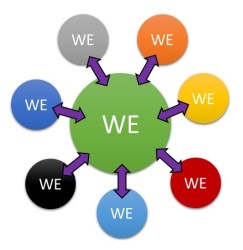
 The second myth of accountability is that accountability is only something I do to other people. Specifically, the people that work on my squad or unit. If my view is that accountability is an external process of me holding others to my expectations or those of the department, then I am creating a culture of “them” and “they.” With this idea of accountability, I believe I must hold them accountable at all times and attempt to control their performance towards my expectations. This often comes across as micromanaging to those being led and to me it feels as if my entire job has become running around putting out fires all day. To those I am holding accountable, their perspective becomes one of contempt and I have now become part of the infamous “they.” The generic pronoun used to describe those higher in power within an organization when we feel there is not a choice in whatever matter is at hand. Ultimately, this style of accountability is only sustainable for as long as the leader can manage the energy to keep it up and are physically present around those they are “leading” to enforce their expectations. Once the leader becomes too tired to keep it up, they retract to the confines of their office to hide because they just cannot manage the level of effort required to constantly hold six to eight people constantly accountable. Worst of all is that none of those on the squad or unit have ever learned how to hold themselves accountable to these expectations because the boss has always done it for them.
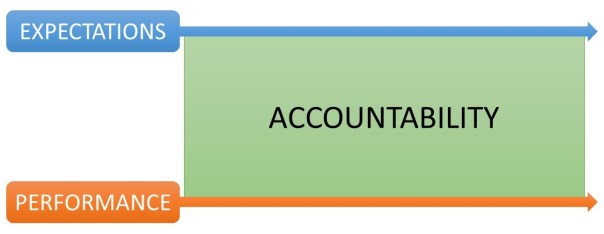
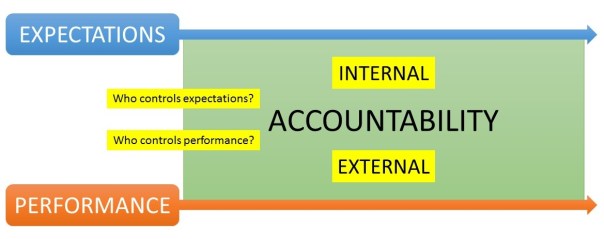
 The truth about leadership accountability is that it is all about ME. It starts with ME. It sustains with ME. It grows with ME. It can be ended by ME. The concept of anything in leadership being “all about me” is a colossal departure from 99.9% of what I read and hear about good leadership, but when it comes to leadership accountability it truly is controlling MY actions, MY attitude, and MY effort that dictate my application of accountability. Leadership accountability is an inside out process. It is through internal accountability that I set the proverbial bar or expectations. Those I am leading see what I am doing, how I am doing it, and most importantly I explain why I am doing what I am doing. As the example is set, then I have earned the right to set external expectations of those I am leading because they know that I am not and never would ask them to do something I am not doing or willing to do myself. In other words, I must exemplify accountability before I can ever expect it from those I lead – that is leadership accountability.





 Thin Blue Line of Leadership