Tag Archives: leader

10 Steps for Teaching Law Enforcement Leadership – Part 1

“The rank of office is not what makes someone a leader. Leadership is the choice to serve others with or without any formal rank. There are people with authority who are not leaders and there are people at the bottom rungs of an organization who most certainly are leaders. It’s okay for leaders to enjoy all the perks afforded them. However, they must be willing to give up those perks when it matters.”

~ Excerpt from Leaders Eat Last by Simon Sinek


A couple of weeks ago, I received a direct message on Twitter that asked the following: “I was in the military and have been a police officer for 10 years. I would love to hear how you teach leadership. I’m not trying to be a doubter, but I work for some non-leading people who don’t know or understand leadership or how to lead.”

First, let me say how unfortunate it is that you are currently working for “some non-leading people.” I can empathize with how you are feeling and guarantee you are not alone in that feeling. In fact, most law enforcement agencies have their fair share of “non-leaders” who are in positions of higher rank. Policing is a noble profession with an amazing purpose and plenty of fun, exciting moments; but all of that can be overshadowed when working for a “non-leader.”

Law enforcement agencies hire people from many different facets of life. Some come from the military, some come from the business world, and others come straight out of college. Every one of these people enter the law enforcement profession with many different prior experiences and therefore different definitions of leadership and what it should look like. To teach leadership within a law enforcement agency, this fact must be addressed.

It is imperative that law enforcement agencies develop a strategy for teaching leadership and developing leaders within the organization from the moment an officer is hired and throughout the entirety of their career. Only then can an agency begin to achieve leadership excellence throughout every level of rank.

Here are the first 5 steps for teaching leadership in law enforcement:

  1. Hire Leadership Potential

Teaching leadership starts by hiring the right people. In order to develop leaders, an organization must identify people in the hiring process that are self-reflective, values based, and authentic. They must possess the capability to assess themselves and their actions honestly. An ability to identify both strengths and weaknesses is vital in the development of a leader. Their values must be clear because as a police officer they are going to be given great power and we all know that with great power comes great responsibility. Clear values also make decision-making easier and good decision-making is a key characteristic of good leaders. Authentic people know who they are. They are comfortable with themselves and can therefore withstand the pressures of the job; both inside the organization and out. If this were easy, every law enforcement agency would do it. In order to find these people in the hiring process, the true leaders within the agency must be involved in the process at all levels. This is key because those that are true leaders and have seen true leadership possess the unique ability to spot other leaders.

  1. Define Leadership

In order to define leadership, a law enforcement agency must start by defining its desired culture. Culture should answer questions like the following: Who do we want to be? and What are we all about? As mentioned in previous blogs, culture is made up of an agency’s prevailing actions and attitudes over time. Defining desired actions and attitudes creates the culture. (Example “Culture in Just 4 Words”) Only when a clear vision of the desired culture exists can specific leadership characteristics be defined. Defining leadership means thinking about the desired culture and asking the following question: What specific actions and attitudes do leaders within the organization need to be exemplifying in order to promote the desired culture? (Example “The 10 Law Enforcement Leadership Commandments”) Do not confuse this with a generic department vision or mission statement. Defining leadership means to identify specific actions and attitudes that leaders and developing leaders should be applying to everything they do and every decision they make.

  1. Learn about Leadership

True leaders are lifelong learners. They recognize that there will never be a point in their career when they can just relax, stop learning, and become stagnant to knowledge. To create this atmosphere of lifelong learning, law enforcement organizations must encourage and provide leadership education. In the same way officers train regularly in defensive tactics, firearms, and legal updates, leadership training should be just as regular. Too often, leadership training is left up to individuals to seek out their own learning. If an agency takes the time to define their own style of leadership, then they should be supporting it with training that builds off of their leadership definition. Departments can encourage discussion groups at each level of rank where similar challenges and successes can be shared with each other. Develop a preferred leadership reading list that contains books that support the definition of leadership chosen by the department. Here are some books that have defined my definition of leadership: Start with Why by Simon Sinek, Leaders Eat Last by Simon Sinek, You Win in the Locker Room by Jon Gordon, The Energy Bus by Jon Gordon, First Fast Fearless by Brian Hiner, EntreLeadership by Dave Ramsey, QBQ! by John G. Miller, Turn the Ship Around by L. David Marquet, Failing Forward by John C. Maxwell, The Three Signs of a Miserable Job by Patrick Lencioni, and The Five Dysfunctions of a Team by Patrick Lencioni. I have personally read all of these books and this same list is given to anyone within my department that has a desire to learn more about leadership.

  1. Identify Informal Leaders

If a department adheres to Step #1: Hire Leadership Potential, then it is imperative that the current leaders within the organization keep a constant watch for officers that are demonstrating leadership potential from informal positions. Here are a few key behaviors that identify informal leaders: They teach others how to be better officers. They learn from their mistakes. They take the lead on calls for service. They absorb learning about the job. They do not fear hard work. They find ways to help others. They bring others together. They are not scared to give or take advice. They are active participants in briefings. They are always looking to be the best officer they can be. They stay positive and seek solutions when issues arise instead of mindlessly complaining. Once identified, find ways to recognize and reward their leadership behaviors. This will not only reinforce the leadership behaviors of the informal leader, but will also spark other officers to follow their example. (Example “A Law Enforcement Recognition Idea”)  It is also necessary to keep these informal leaders stimulated by involving them in discussions about leadership or introducing them to the department leadership reading list – See Step #3: Learn about Leadership. Finally, challenge these informal leaders to start planning and doing what is necessary to move into more formal leadership roles within the department such as testing for a specialty unit or becoming a field training officer (FTO).

  1. Leadership-Based Field Training Officers

Creating a leadership-based FTO program starts with going back to Step #2: Defining Leadership. Basing the testing and selection criteria off of this definition is key. The defined actions and attitudes that the department identifies as the qualities it wants its leaders to exhibit should be used to create test questions, oral board questions, and/or scenarios. The candidate pool should primarily be filled with the informal leaders identified in Step #4: Identify Informal Leaders. Once selected, FTO School should not only be based upon reinforcing the defined leadership characteristics, but also on instructing/evaluating in one-on-one situations, progressive trial/error based learning, positive engagement, and situational decision-making. Unfortunately, many FTO schools spend the majority of their time on administrative tasks, documentation, and strict policy adherence to mitigate liability. While these are important, leadership-based FTO programs should be built upon the belief that a trainee does not care how much the FTO knows until the trainee knows how much the FTO cares. This belief is most easily ingrained into new FTO’s if they have had it exemplified to them by their FTO’s and experienced the success that can be had from it.

These are the first 5 of 10 Steps for Teaching Leadership in Law Enforcement. The next blog post will continue with Steps 6 through 10.

The mission at Thin Blue Line of Leadership is to inspire law enforcement supervisors to be the best leaders they can be by providing positive leadership tactics and ideas. Inspired leaders, inspire cops, improve policing, create better communities. It’s just that simple! Thin Blue Line of Leadership is here to help.

Please do not hesitate to contact us if you have ideas to share or suggestions for improvement. Your thoughts or comments on this blog are always appreciated either below or on our Facebook page. You can also follow us on Twitter at @tbl_leadership.

Continue saving the world one call at a time and as always, LEAD ON!

A Simple Gesture

I am a police officer that just happens to have the rank of sergeant. I have 8 police officers that work with me to keep the community we serve safe on one of the toughest work schedules and largest districts in the department.

One week a few months ago, due to scheduling issues out of my control, my squad of 8 officers was reduced to just 4. I knew that we were going to be slammed handling the same amount of calls for service that usually come in, but with half the number of officers.

At the beginning of each shift that week, I walked into the briefing room and extended my hand to my 4 officers for a handshake. I told them that I appreciated them being there and for all of the hard work that we knew was ahead of us.

What I found was that the simple action of shaking their hands in advance of what was before us served two purposes:

  1. The handshakes demonstrated respect for them by showing appreciation for their presence in the face of a tough situation.
  2. The handshakes also negated the negativity of the situation and turned it into a positive to be fought through as a team, not to be complained about.

In recognizing the power of this simple action, I felt compelled to find a way to continue building the same connection with my officers that started with this simple gesture. With the busy week over, I had the weekend to consider how I was going to use it going forward.

I walked into our squad briefing the next Wednesday and looked around at my 8 young officers ready to hit the road. Without thinking about it for a second, I extended my hand and began walking around the room shaking each of their hands and saying, “Thanks for being here.”

To this day, I start every Wednesday briefing just like that. Do not underestimate the power of a simple gesture and the positive effect it can have on your officers.

UPDATE: Since writing this, I have move from being the patrol supervisor of this amazing squad to being a supervisor in my department’s training unit. Every time I cross paths with one of these 8 officers that were on that patrol squad, they all seek me out and come looking for that handshake.

The mission at Thin Blue Line of Leadership is to inspire law enforcement supervisors to be the best leaders they can be by providing positive leadership tactics and ideas. Positive leadership and creating a positive squad culture are on-going commitments that must be nurtured and developed over time and Thin Blue Line of Leadership is here to help.

Please do not hesitate to contact us if you have ideas to share or suggestions for improvement. Your thoughts or comments on this blog are always appreciated either below or on our Facebook page. You can also follow us on Twitter at @tbl_leadership.

Continue saving the world one call at a time and as always, LEAD ON!

Culture in Just 4 Words

THE SETUP: Another sergeant asked how my squad of mostly brand new police officers was having such great success on the road and in the community. I attributed it to the culture that we had created as a squad in the briefing room and then worked hard to exemplify each shift on the road. When he asked what my squad’s culture was, I quickly rattled off just 4 words – Positivity, Activity, Teamwork, and Humility. As I said these 4 words aloud, the other sergeant looked at me like I was holding out on him and I replied, “No really . . . that is our culture in just 4 words and it works.”

THEN IT HITS ME: The realization that came to me as we continued this conversation was that a strong, sustainable culture should be just that easy to define, explain, understand, and apply. Culture has to be tangible and not just something that is said or posted on a wall. It also has to be easily articulated and reproducible by all involved with it.

THE HOW: I pulled out a piece of paper and divided it into 4 boxes. At the top of each box I wrote one of the words that I had told the other sergeant about – Positivity, Activity, Teamwork, and Humility. Knowing that culture is defined by our actions and attitudes, I made sure that I could define each of the words in terms of both; specifically actions and attitudes that I had seen these officers previously demonstrate. This would give me an easy way to talk about the culture with specific examples. Here is what I came up with . . .

POSITIVITY

  • Know your “why.”
  • Community service – treat everyone with dignity and respect.
  • Do the right thing, at the right time, for the right reasons.
  • Recognize each other for good police work.

ACTIVITY

  • Strive to be the most active squad in the city.
  • Calls for service are our priority, but initiative fills the gaps.
  • Take pride in your beat, know your beat, and work it as such.
  • Be a leader on calls – step up when others hesitate.

TEAMWORK

  • We before I.
  • Many hands make light work – have a “how can I help” mentality.
  • Back each other up – stay safe.
  • No gossip, no complaining – develop solutions.

HUMILITY

  • Get involved – policing is experiential learning.
  • Don’t fear mistakes, learn from them.
  • Remain humble and continue learning.
  • Take training seriously; continue growing throughout your career.

The above 4 words and defining bullet points are what best describe the actions and attitudes of our squad and what we want to project to everyone we interact with in the department and the community. The next step was presenting it to the squad.

THE PRESENTATION: On the presentation day, I explained to my 7 officers the conversation I had with that other sergeant and how this all got started. As I spoke about each of the 4 words and the corresponding bullet points, I used specific examples of times when I had seen these actions and attitudes displayed previously by them. I wrote each of the words on the outside of a box that I had drawn on the whiteboard. The conversation was amazing. Based on their comments the bullet points were altered to reflect their input.

When everything was said and done, I explained that if everything they said or did on this job could fall into the confines of this box then they would know they were doing policing the right way. It is only when actions and/or attitudes don’t fit into that box that problems occur and build distrust between the squad, police department, and their community.

REINFORCEMENT: Whenever a new officer comes to the squad, I go over these same 4 words in the same way as described above. The only thing that changes are newer, better examples. This serves two purposes. First, it reinforces the importance of our culture to the officers that have heard it before and keeps it fresh in their memory. Secondly, by going over this on the new officer’s very first day of joining the squad it solidifies how important we take our culture and begins to quickly assimilate them into the fold. If there are no new officers coming to the squad, then I make sure it gets repeated and discussed at least once every couple of months.

Between squad expectation presentations, it is vital to positively reinforce the desired culture. Whenever a member of the squad handles a difficult call, solves a problem, or demonstrates a great attitude about a tough situation; I make sure to mention it in briefing the next day and thank them for their outstanding service and commitment to our squad expectations. I make sure to specifically attribute whatever they did to the word(s) it best corresponds to. Culture in 4 words has gone over even better than I expected. In fact, they now recognize each other in briefing when they see something on a call that I was not able to get to. This reinforcement creates a positive cycle that just continues building and building and building.

THE CHALLENGE: Obviously, if you are still reading this far into the blog I have peaked your interest. Answer the following questions to get you started . . .

  1. If your squad was running exactly the way you wanted it to, what 4 words would you chose to describe your squad’s culture?
  2. Once you know your 4 words, list 3 – 5 specific actions or attitudes for each word that exemplify specifically how you would like to see that word expressed by your officers.
  3. Present your 4 words to your squad and have a discussion.
  4. Take the time and make opportunities to positively reinforce the 4 words of your culture.

Squad expectations need to be about establishing culture; not rules. Police departments have plenty of rules, laws, and policies to follow; that’s what those big books of general orders and revised statutes are for. If you get the culture right; the rules will take care of themselves. So, I challenge you to discover your 4 words and get them out there to your squad.

The mission at Thin Blue Line of Leadership is to inspire law enforcement supervisors to be the best leaders they can be by providing positive leadership tactics and ideas. Positive leadership and creating a positive squad culture are on-going commitments that must be nurtured and developed over time and Thin Blue Line of Leadership is here to help.

Please do not hesitate to contact us if you have ideas to share or suggestions for improvement. Your thoughts or comments on this blog are always appreciated either below or on our Facebook page. You can also follow us on Twitter at @tbl_leadership.

Continue saving the world one call at a time and as always, LEAD ON!

HELP WANTED: Police Officers

In August of 1914, Sir Ernest Shackleton led the Endurance Expedition on a voyage to make the first land crossing of the Antarctic continent. Prior to the expedition, Shackleton needed to raise a crew and posted the following help wanted advertisement:

“Men wanted for hazardous journey. Low wages, bitter cold, long hours of complete darkness. Safe return doubtful. Honor and recognition in event of success.”

Even after posting such an unflattering advertisement of the trip ahead, sailor’s responded. In the book, “Quit You Like Men” by Carl Hopkins Elmore, Shackleton said that the response to the advertisement was so overwhelming that “it seemed as though all the men of Great Britain were determined to accompany him.”

By January 1915, the Endurance had become trapped in the thick Antarctic ice and began to break apart forcing Shackleton and the crew to abandon it. They had to set out on foot dragging lifeboats and supplies across the ice for any chance of survival. Eventually they located a suitable place to establish a camp. Shackleton realized that in order to survive they were going to need to take matters into their own hands; so they developed a rescue plan to seek out help.

Prior to Shackleton leaving on the rescue mission, a crew leader told Shackleton, “Whatever happens, we all know that you have worked superhumanly to look after us.”  Shackleton replied, “My job is to get my men through all right. Superhuman effort isn’t worth a damn unless it achieves results.” To make a great, long story short, it was only through the crew’s dedication and Shackleton’s leadership that they were eventually rescued over a year after the ship had become trapped. This is a fabulous story of leadership, sacrifice, and survival, but what really caught my attention was still the unflattering help wanted advertisement that attracted such a positive response from prospective sailors.

With the current climate surrounding law enforcement, how would a help wanted advertisement have to read in order to be just as truthful and unflattering, yet attract exactly the type of people we want in policing? Maybe it would read something like this…

HELP WANTED: Men and women wanted for hazardous 20 – 25 year career. Long hours during all times of day and night enforcing laws created by politicians you don’t necessarily agree with. Low to moderate wages protecting and serving a community that you may not even live in. Solve problems and risk life regularly for people that you don’t know and possibly don’t even like you while constantly transitioning between the roles of counselor, guardian, enforcer, educator, warrior, caretaker, and community representative. All interactions with the community must be recorded on video. Actions, especially mistakes, will be highly critiqued, criticized, and possibly penalized. Honor and recognition in event of success.

Honor and recognition in event of success . . . is that all it takes? Yep – Along with being part of something greater than yourself and believing that on each call you have the ability to make a difference in another person’s life. Those are the results that we, those that call ourselves police officers, are looking for when we chose this career. As Shackleton stated, “Superhuman effort isn’t worth a damn unless it achieves results.” That is why we make the “superhuman effort” for a job that has this kind of description.

So, how do we maintain this level of effort? We remember our “why” . . .

Why did I chose to be a police officer?

Why did I chose to be a leader of police officers?

If you read those questions and cannot articulate an answer, or worse don’t remember, then I challenge you to sit down, brainstorm some ideas, and seek the words that describe why you were inspired to choose a career with this type of help wanted advertisement.

As soon as the right words come together and you can clearly articulate them, put them somewhere very safe where they cannot be forgotten. Your “why” will get you through that 20 – 25 years career just as it got Shackleton and his men through their expedition without a single life lost. If you get the privilege to lead officers through their policing careers, share your “why” often to motivate and inspire greatness in them so that they too may receive “honor and recognition in event of success.”

The mission at Thin Blue Line of Leadership is to inspire law enforcement supervisors to be the best leaders they can be by providing positive leadership tactics and ideas. Positive leadership and creating a positive squad culture are on-going commitments that must be nurtured and developed over time and Thin Blue Line of Leadership is here to help.

Please do not hesitate to contact us if you have ideas to share or suggestions for improvement. Share your thoughts or comments on this blog below or on our Facebook page. You can also follow us on Twitter at @tbl_leadership.

Continue saving the world one call at a time and as always, LEAD ON!

3 Components to Law Enforcement Leadership

There is a simple formula for effective law enforcement leadership and it’s made up of just 3 components. First, build positivity within your officers. Next, make your officers feel like they belong. Lastly, give your officers direction. Below are the 3 components to law enforcement leadership and a few examples of how leaders can apply each of them to their team, squad, district, precinct, or department.

  1. Build positivity within your officers.

People are instinctively drawn to things that make them feel positive about themselves. As a leader it is imperative to consider how your actions and attitude make others feel about themselves. After someone is done talking to you or after you finish conducting a briefing, what is the general feeling when it is over – do they feel positive or negative? Here are 3 ways to make officers feel positive about themselves when you are around . . .

  • Help officers identify and remember their “why.”
  • Recognize and reward good police work routinely.
  • Find ways to serve those you wish to lead.
  1. Make your officers feel like they belong.

As police officers, there is already a jump start on this component due to the natural brother/sisterhood created just by putting on the badge. But, it is vital to maintain that feeling throughout the entirety of a 20 – 30 year career and to do that it must be a major component of your leadership. Develop a team within your realm of leadership and bring the officers that work with you into the fold as quickly as possible.

  • Build a team atmosphere where everyone works together to create success.
  • Create a positive environment that focuses on solutions to problems as opposed to mindlessly complaining.
  • Develop a “what can I do” mentality among your officers.
  1. Give your officers a direction.

Some call it a vision, some call it a mission; whatever term is used officers need to know the direction they are expected to go and the plan to get there. Therefore, it is incumbent on the leader to define the officers’ roles with clear expectations about every aspect of policing: how to treat people, production, attitude, etc.

  • Build culture with clear squad expectations that address both actions and attitudes.
  • Develop informal leaders within the squad to assist in perpetuating the squad culture.
  • Be out on the road with your officers demonstrating your expectations.

What’s challenging about these components is that they require working with both people and their feelings. Those are not simple challenges to address in the law enforcement world; especially feelings. Not many supervisors are willing to venture into that realm, but those that strive to be the best leaders will because they recognize the benefits that can be had.

What’s rewarding about these components is that when they all come together, it creates an environment that is just incredible to work in for both the supervisor and the officers. It allows the spirit of leadership to thrive and the officers within that environment to be both inspired and motivated to do policing and serve their communities.

The mission at Thin Blue Line of Leadership is to inspire law enforcement supervisors to be the best leaders they can be by providing positive leadership tactics and ideas. Positive leadership and creating a positive squad culture are on-going commitments that must be nurtured and developed over time and Thin Blue Line of Leadership is here to help.

Please do not hesitate to contact us if you have ideas to share or suggestions for improvement. Share your thoughts or comments on this blog below or on our Facebook page. You can also follow us on Twitter at @tbl_leadership.

Continue saving the world one call at a time and as always, LEAD ON!

Staying on P-A-T-H

Who are you as a leader? How do you know if the decisions you are making are meeting your personal expectations? Do you take the time to weigh your actions, attitudes, and effort against a personal mission and set of core values? Have you taken the time to define your own mission and core values? How do you know if you are staying on path?

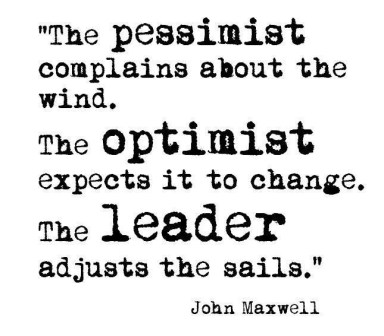
The other day, I was instructing a class on Leadership Accountability to a group of 20 officers, sergeants, and civilian staff that are currently in my department’s leadership development program. On the whiteboard, I put up the following quote to generate discussion…

IMG_4665

We began discussing the importance of a leader controlling their actions, attitude, and effort when looking for solutions to challenging leadership dilemmas. Then one of the officers asked the following question, “I get that the leader must adjust their sails to control what they can control, but how do they know the direction to adjust them? What is the ‘right’ thing to do?” This was a phenomenal question for an officer that is just beginning to explore their own leadership potential.

The discussion continued among the group and the consensus was that a leader has to know, believe, and exemplify their personal mission and core values when choosing their direction. That was when another student asked me, “Sarge, do you have a mission and core values?” Due to my personal interest in leadership and the passion that keeps Thin Blue Line of Leadership going, I have spent more time than most thinking through and articulating answers to questions just like this. I looked at the group and stated, “I do and that is exactly how I know when I’m staying on P-A-T-H.”

I first addressed my personal mission – “Wherever I go and whatever I do, my mission is to leave it better than I found it.” It is from this personal mission statement that I developed my set of four core values. This mission and these core values lead every decision I make in my effort to leave whatever I am a part of better than I found it. To put it simply, it is my P-A-T-H.

P-A-T-H is an acronym for Positivity, Activity, Teamability, and Humility. I approach everything with this set of core values and that is exactly how I know how to control my actions, attitude, and effort. Not just when things are going good, but also went they aren’t. Here is how I explained my P-A-T-H to the group.

POSITIVITY

Positivity is NOT about walking around with a shit-eating grin on my face saying everything is wonderful, even when it isn’t. It is about having appreciation and gratitude for the good things in my life no matter how large or small they may be. Positivity is about having a “get to” attitude, not a “have to” one. I get to go to work, I get to spend time with my family, I get to do a lot of things that I appreciate more when I don’t consider them as things I have to do. It is about seeing the difficult things in life as challenges and not threats. Finally, positivity is about being solution-oriented and controlling the things I can control, my actions, attitude, and effort, in order to solve those challenges before me.

ACTIVITY

Activity is about doing the things I place value in and committing the necessary amount of effort to being successful in those activities. If the activity I am about to do will make my family, career, personal health, work environment, or marriage better than I found it that day, then I know I am doing an activity that has value. This is what leads me in understanding where to spend my time since the one things we all have equally is 24 hours in a day. While we all have the same amount of time in a day, we do not have the same amount overall in our lives; so activity is one of my core values so I remember to commit my time to those things that matter to me.

TEAMABILITY

Teamability is about looking at the groups I am a part of, such as my family, my friends, and my work group, and thinking of each of them as a team I am a member of. As a team, we value our strengths, help to overcome weaknesses, and make sure everyone’s voice is included in decision-making that affects the team. Teamability is about being inclusive and by being an inclusive team we build influence with one another. That influence is built by spending time together, communicating openly and honestly, and then building connections with each other. Once those three things are occurring throughout the team, the bi-product is shared contribution to the team as a whole. Teamability, put simply, is about putting we before me.

HUMILITY

Humility is about having a growth mindset and keeping my pride and ego in check. I’ll be honest, of these 4 core values this is the one I struggle with the most which is exactly why I included it as a core value. My worst decisions ever made in my personal life and in my law enforcement career have come when I let my pride and/or ego dictate my direction. Humility focuses me on consistently recognizing that I always have room for improvement as a husband, father, brother, son, friend, instructor, sergeant, leader, and person. Humility is about asking the right questions – What can I do? How can I make this better? What can I learn here? How can I share this lesson with others? As C.S. Lewis said, “Humility is not thinking less of yourself, it is thinking of yourself less.”

That is my personal mission and core values. They are how I know the exact direction to adjust my sails. I’ll end this blog with the same questions I started it with and challenge you to spend the time answering them…

  • Who are you as a leader?
  • How do you know if the decisions you are making are meeting your personal expectations?
  • Do you take the time to weigh your actions, attitudes, and effort against a personal mission and set of core values?
  • Have you taken the time to define your own mission and core values?
  • How do you know if you are staying on path?

The mission at Thin Blue Line of Leadership is to inspire law enforcement supervisors to be the best leaders they can be by providing positive leadership tactics and ideas. Positive leadership and creating a positive squad culture are on-going commitments that must be nurtured and developed over time. Thin Blue Line of Leadership is here to help.

Please do not hesitate to contact us if you have ideas to share or suggestions for improvement. Your thoughts or comments on this blog are always appreciated either below or on our Facebook page. You can also follow us on Twitter at @tbl_leadership.

Continue saving the world one call at a time and as always, LEAD ON!
10 Law Enforcement Leadership Commandments

The mission at Thin Blue Line of Leadership is to simply inspire law enforcement leaders to be better than they were yesterday. Sharing positive leadership tactics and creating a positive law enforcement culture are on-going commitments that must be nurtured and developed over time by anyone in a law enforcement leadership position.

The ideas below are simple, but not easy. They take both effort and time. These are all things that are within your control by making the most of your actions, your attitude, and your effort as a leader. Current research is showing that it is not about the big grandiose gestures, but the consistent small actions that those you are leading come to trust about you.

Here are 10 Law Enforcement Leadership Commandments . . .

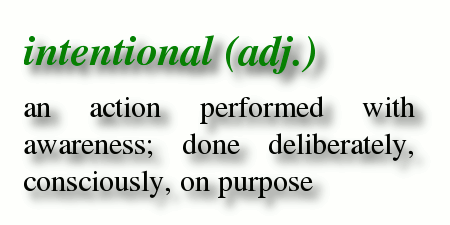
  1. Emphasize good culture over rules. Good culture within the organization or squad will take care of the rules. Be intentional about what you are creating.
  2. Create and train your officers to be the next leaders of the organization. Develop them through your mentorship. Leadership development starts the moment they are hired.
  3. Remember your “why” and share it often. Know your officers’ “why” and don’t let them forget it. This is the fuel that will get them through a 20+ year career.
  4. Your officers will only be as good as they are trained to be. Work to create a culture of humility and learning.
  5. Emphasize the value in doing the right thing at the right time for the right reasons.
  6. Teach your officers not to operate in fear when their intent is pure.
  7. Recognize, reward, and promote good police work as a matter of routine. Remember, your officers long for attention, appreciation, and acceptance.
  8. Be purposeful in your briefings. Don’t let the little time you have with the whole squad go to waste.
  9. Create influence through contact, communication, and connection. Then you will get their contribution. Get out from behind the desk and handle some calls with them.
  10. You will succeed the most through your officers succeeding. Don’t put personal gain above their needs.

Have something that you would have added to this list? Share your thoughts or comments with us below or on our Facebook page. Continue saving the world one call at a time and as always, LEAD ON!
 

Commandments

Change and Reputation

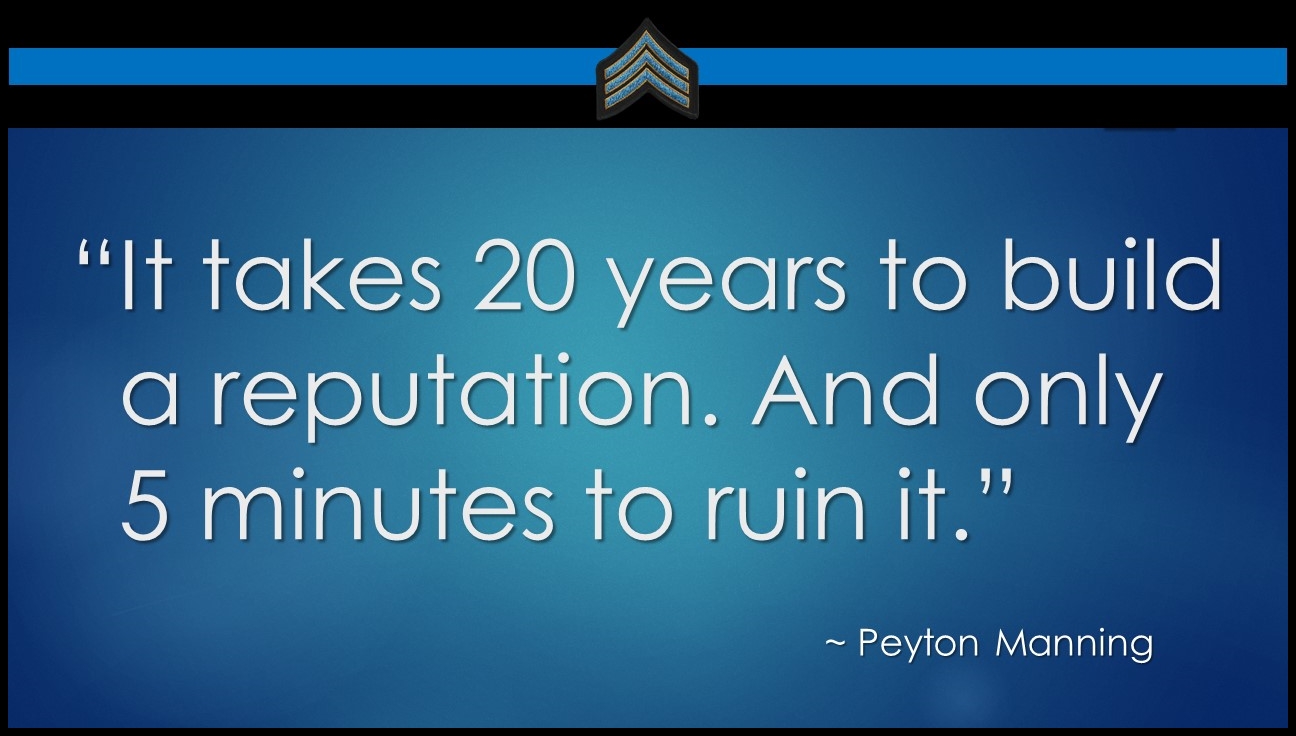
Reputation1

As a police sergeant, I have 2 primary goals regarding the officers on my squad: 1. Keep them safe. 2. Assist them in being successful at reaching their goals. To assist them in being successful with their goals, I find it is necessary to help give them perspective on the “big picture.” In law enforcement, it is easy to get caught up in short-sighted issues that demoralize a squad like staffing, compensation, negative public perceptions, etc. With that being said, I wrote this and read it in one of my recent briefings.

Change and your reputation go hand in hand in any organization, but in a mid-sized police department it is even truer – there is nowhere to hide within a 400 person department. We all know the phenomenal street cop whose career was or is being derailed by their poor attitude and/or reputation. More times than not, their poor attitude and/or reputation is related to their inability to deal with change effectively.

Change is inevitable. The only thing that stays constant is that circumstances and situations are always changing. How you deal with change comes down to your own personal responsibility and accountability – What do you expect of yourself? This defines not only your ability to deal with change, but also develops your reputation within the organization. Are you a whiny victim of change or are you someone who can deal and work within the system that is present?

The sooner it is accepted that the system is what it is and will always be slow to respond, the easier it becomes to deal with organizational lapses. Organizations, like people, are inherently flawed – no organization is perfect because they are run by human beings who are made up of attitudes, egos, and emotions. To move beyond the lapses, though, you have to take the long view and not be focused on just the short-term. So, the question becomes, how do you react to change to get the best outcome and solidify a reputation as a positive, forward thinker?

First, when change is approaching, ask this question of yourself, “What can I do?” This is the most direct and proactive response you can have. Sometimes you’ll have the ability to affect change before it is upon you and sometimes you won’t. The key is to remember that working within yourself is the only thing you actually have true control over – your actions, your attitude, and your effort.. By taking initiative and working from the front, you can often help direct change in a more palatable direction.

But, what if there is nothing you can do to directly affect the change that is coming? I answer that question with a quote from Maya Angelou, “If you don’t like something, change it. If you can’t change it, change your attitude.”

If you can’t affect the situation directly, then whining, complaining, or having beat office bitch sessions will do nothing but hurt YOUR reputation. The perceived “problem” will rarely be blamed because it is so ambiguous and comes from “they” levels. You know who “they” are, right? I implore you not to see change as something that is out to get you – it is vital to your career success to be a person who can identify the positives and opportunities that come with change.

There are 3 things you are always in control of when it comes to change – your actions, your attitude, and your effort. The common denominator to all 3 of those is YOU – you are in control and no one can take that away unless you let them. It is all about being proactive, not reactive.

Here are 5 steps to help deal with change in a positive, forward-thinking manner. These steps are adapted from the book Who Moved My Cheese? by Spencer Johnson.

Change Awareness

  1. Accept that change happens.
  2. Anticipate change.
  3. Affect change, if possible.
  4. Adapt to change quickly by adjusting your perspective.
  5. Enjoy change by being in personal control of your response to it.

Ultimately to succeed, not just within an organization, but in life, it is about survival of the fittest – your ability to adapt and overcome to change. Just like responding to a call, the situation is always going to be fluid. How you respond is your choice and builds your reputation either for better or for worse!

The mission at Thin Blue Line of Leadership is to share positive leadership tactics with the field of law enforcement. Positive leadership and creating a positive squad culture are on-going commitments that must be nurtured and developed over time by anyone in a law enforcement leadership position. By discussing topics like this, law enforcement leaders are tending to the welfare of the “whole” officer, not just the one in uniform.

Share your thoughts or comments with us below or on our Facebook page. Continue saving the world one call at a time and as always, LEAD ON!

Be Intentional About Culture

The mission at Thin Blue Line of Leadership is to share positive leadership tactics and training ideas with the field of law enforcement. Positive leadership and creating a positive squad culture are on-going commitments that must be nurtured and developed over time by anyone in a law enforcement leadership position. Development of a positive culture must be intentional; otherwise, who knows what will develop in its place.

For demonstrative purposes, I am going to discuss culture as it relates to the position of a sergeant with his/her squad, but these concepts are applicable at any level within an organization. When speaking of culture, I am specifically defining it as the prevailing actions and attitudes that a group demonstrates on a consistent basis. Actions and attitudes are the building blocks of culture and both must be guided in a desired direction.

Here are 4 ways to develop an intentional culture . . .

  1. Cultural development begins the minute you assume a leadership position. The minute you walk into your first briefing, you are already beginning to develop the culture of the squad. Were you early, late, or right on time? Officers are watching every step you take and are trying to decipher what you like, what you don’t like, what you expect of them, and what they can get away with. You must already know what direction you want to go or a power vacuum will form. The squad is seeking direction and leadership, either you give it to them or someone else will. There is not a minute to waste.
  2. Your style will teach your officers the culture. To be intentional about your squad’s culture, you must feed them examples of how you picture the culture. This cannot be done from the office. It requires being out on the road with them and demonstrating your style in action so they aren’t having to guess. Contact, communication, and connection between you and your officers is key. While in briefings, encourage your officers to ask “why” so they can better understand your decision-making process. The more they understand, the more the culture will begin to reflect the style you desire.
  3. What you reward will be repeated. You must reward desired actions and attitudes consistently. When you know within yourself the direction you want your squad to go, you will be able to easily recognize behaviors that deserve rewarding. This needs to be done even more blatantly if the desired behavior is a significant change from how things were prior to your arrival. Positive reinforcement is a very powerful tool for a leader, but you must be careful in what you reward because that behavior will be repeated. When giving compliments, specifically define what was good. Instead of just saying something like, “Nice job;” specifically define the action or attitude that you observed. For example, “Nice job, I like the way you kept your cool back there when that guy was yelling at us. You didn’t lose your temper and maintained officer safety without lowering yourself to that level.”
  4. What you ignore, you condone. When taking over a leadership role, such as a sergeant starting with a new squad, there are always going to be things you see that you don’t necessarily agree with and differ from your desired culture. It is incumbent of you to not ignore them. Ultimately, what you don’t address will be assumed to be acceptable. On the flip-side, you must also be careful not to just bark orders about how you want things done or you’ll very quickly take on the persona of a micromanager. To make your redirections acceptable, you must define why it is important to you and why it should be important to that officer.

Before your can have any effect on the culture of a squad, you have to know what the culture is that you would like to have. If you cannot picture in your head what the perfect squad culture would look like, then how can you lead other people in that direction? Take the time to write out your thoughts and think about what has or has not worked in your previous assignments. What qualities made up the best squad/unit you have been a part of? This is your squad’s culture, be intentional about it!

What do you do at your department to be intentional about culture?

Share your thoughts or comments with us below or on our Facebook page. Continue saving the world one call at a time and as always, LEAD ON!

A Law Enforcement Recognition Idea

The mission at Thin Blue Line of Leadership is to share positive leadership tactics and training ideas with the field of law enforcement. Positive leadership and creating a positive squad culture are ongoing commitments that must be nurtured and developed over time. One way to do this is by recognizing and rewarding great police work on a routine basis. Here is an idea that came to me a while back.

I found myself watching a college football game and was noticing the band, the cheerleaders, the crazy student section, the mascot, and of course the players. A thought struck me at that time regarding the strength of culture at these collegiate institutions. Then I began to pay particular attention to the helmets of the Florida State Seminoles and noticed that there were little tomahawk stickers on the player’s helmets. This was not something new as I have seen them on many other college team helmets, but this day I guess it just struck me at the right time.

helmetA Wikipedia search of “helmet stickers” revealed that recognition or pride stickers have been awarded to players since the mid-1950’s for making excellent plays, selfless plays, and even for hard work at practices. The idea stemmed from fighter pilots that marked their planes to signify the number of kills or successful missions they had flown. Then I started to make a connection to police work.

Most police departments have awards that are given out on an annual basis, but if you really want to positively reinforce behavior then it needs to be done on a much more consistent basis. So, I created some law enforcement recognition stickers using the Thin Blue Line of Leadership logo and had them printed at evermine.com.

sticker

For a very small cost ($15+shipping), I received over 100 custom recognition stickers (1″ diameter) to give out in briefings to reward the great things that officers do on a daily basis. I am not selling anything or being paid by evermine.com to tell you any of this; I am simply sharing an idea and Evermine happened to be the website that popped up first.

TYPES OF STICKERS: Walking into briefing with a couple of recognition stickers immediately makes everyone wonder who is being recognized and for what. It provides the perfect opportunity to reinforce more of the “smaller” things that do not rise to the level of an official ribbon or annual award. If you catch an officer changing a flat tire, give them a sticker. Have an officer that routinely volunteers to hold over a couple of extra hours to accommodate staffing needs, give them a sticker. If an officer does an amazing investigation or writes a great report, give them a sticker after they talk about it with the squad so everyone has a chance to learn from that officers great moment. Any action that supports what the squad is all about, the desired culture, should be recognized. This sticker is only given out when I, the sergeant, want to personally thank them or recognize them for some good work they did or a sacrifice they made for the betterment of the squad. What gets recognized and rewarded gets repeated.

After the success of the above recognition sticker,  I created a second sticker for our squad. These stickers could only be received by officers that are being recognized by a person outside of the squad or another officer on the squad.

r1lion

It is a squad logo created of a lion (think LE Memorial) and stars to represent the people on our squad. These stickers were used for two purposes. First, when someone from outside the squad wants to recognize a member of the squad for something. These commendations could come from citizens, other supervisors, upper staff, etc. Secondly, the most interesting use for these stickers was for officers to internally thank each other when someone sacrificed to help them out personally. For example, when an officer finds a good arrest with a ton of items to impound and their squadmates stay late to help them get it done quicker. The next shift, they would come ask me for however many stickers they needed and in briefing would thank the officers that helped them out. The coolest part of the stickers is that they ended up perpetuating officers going above and beyond for their fellow officers to a whole new level than I had ever seen in our department.

The officers decide where to accumulate their stickers, but consensus seemed to be their ticket clipboards. Some put them on their locker or some other place they see on a daily basis. This serves as a consistent reminder of their many accomplishments and makes a statement about having a positive squad culture.

clipboard

Do you have a similar way of rewarding officers in your department?

UPDATE: Here is the funny thing . . . I have since spoken to others around the department that knew of these stickers. When asked what the external perspective was of this idea, they all tell me that at first they thought I was crazy. Giving stickers to grown adults had a little too much of an elementary school ring to it. BUT, when they looked into it further, came into briefing to see it in action, and talked directly to the officers what they found out was that this wasn’t elementary or condescending at all. They all found themselves wishing they had done something to be recognized for. Here is the KEY TAKEAWAY, people long for attention, acceptance, and appreciation.  If a leader can find a way, even a way as simple as stickers, that addresses their officers’ needs of attention, acceptant, and appreciation; then they will have found a catalyst for positive culture, change, reinforcement, and team building. It doesn’t take much, but a little effort.

Share your thoughts or comments with us below or on our Facebook page. Continue saving the world one call at a time and as always, LEAD ON!