
The mission at Thin Blue Line of Leadership is to share positive leadership tactics with the field of law enforcement. It is undeniable that law enforcement is a unique working environment and one in which the word positive is not always easily associated. Law enforcement is not just about laws and policies. It is about the community – victims, civilians, officers, and even the criminals. So, bringing the word “positive” more frequently into law enforcement is a necessity because policing is about people. This belief must be a core value of any Thin Blue Line Leader before delving into a deeper list of qualities.
Leadership comes in many different styles. When it comes to developing one’s own style of leadership, it is most common to emulate leaders that had a significant influence on you either personally or professionally. These role-models of leadership won your heart and then were able to influence your mind.
Here are 10 qualities that define a Thin Blue Line Leader . . .
WINNING RESPECT – Getting people to listen.
1. Competence – Being competent should be a given. Knowing basic and advanced techniques along with any specialty knowledge/skills you possess starts building your officers’ views of your competency. Do not assume that reputation alone will carry you. Accurately recognizing your own strengths and weaknesses will assist you in developing your competency across the board. A TBL Leader proves their competency from call to call and shift to shift.
2. Integrity and Honesty – Most people would say that integrity and honesty are the same thing, but let’s define it more specifically. Integrity is when your actions match your words. Honesty is when your words match your actions. Law enforcement officers are constantly in situations and circumstances that test their integrity and honesty. A TBL Leader exemplifies this by holding themselves and their officers to a standard that is above reproach.
3. Initiative – Do not stand still. Leaders with initiative constantly ask why something is the way it is, can it be improved, and what can I do to help. Just assuming that things are fine because “that’s how we’ve always done it” leads to stagnation and mediocrity. Regardless of the time and effort required, the TBL Leader is always looking for innovative ways to improve themselves, their officers, their department, and their community.
WINNING HEARTS – Getting people to believe.
4. Servant – This is not to be confused with subservient. A servant leader recognizes that as a leader they have taken on the responsibility of being selfless for the good of their officers. It is no longer just about your career, but lifting up your officers in their careers. TBL Leaders find ways to make their officers’ jobs easier by providing them with resources, training, and guidance.
5. Authentic – Be yourself. Arrogance and false bravado will build a wall between you and your officers that will make leading effectively much more difficult. Share your experience openly from both law enforcement and your personal life. Talking about things like your marriage, children, hobbies, or pets allows those you lead to gain insight into your belief structure. If you make a mistake, own up to it and set the example by seeking to improve. You are still human and no one, regardless of your rank, expects you to be perfect at all times. TBL Leaders recognize that when it comes to being authentic, you get what you give.
6. Supportive – Being supportive starts by opening your ears. As a leader, you have to listen, recognize, validate, and only then act. Clear communication with your officers will give you all the information you need to proceed with a course of action. Standing up for your officers, when in the right, is a must because TBL Leaders are the glue that holds a team together.
7. Passionate – Passion should be encourage and never discouraged as long as it is appropriately directed. By setting a clear vision and mission for your squad, the leader creates focus and defines what winning looks like. Police officers like to win and the more they win, the more passion that is generated. TBL Leaders do not fear passion; they work tirelessly to create an environment that generates and feeds off of it.
8. Rewarding – Catching your officers doing something right should be an on-going goal of a leader. Too often, excessive amounts of time and energy are wasted searching for things that are done wrong and rewarding what gets done right gets overlooked. Obviously, serious malfunctions in officer safety or investigations need to be addressed, but there is always a way to address this so it does not destroy the officer’s morale or belief in the mission. TBL Leaders realize that rewarding officers positively reinforces and defines the behaviors that you, the leader, want to promote.
WINNING MINDS – Getting people to change.
9. Learner/Educator – Learner and educator go hand in hand. A leader must be a life-long learner. Personal experience will only hold out so long before you are just repeating yourself over and over. Taking the initiative to seek out new information and experiences will allow you to continue growing. Then, as the leader, you must be willing to share and teach what you have learned so the development of those you are responsible for can continue. No one is an expert in everything. Use your network of resources within the department to find experts in areas where you are weak. The TBL Leader recognizes the great value of learning, but realizes that it is most valuable only when it is disseminated.
10. Translator – As a leader, being a good communicator is vital, but more important than communication is the ability to receive information and translate it into support for the vision and mission of your team. As a first-line supervisor, you are the translation conduit between information coming from upper staff and those on your team. The way in which you respond to and present the information you are given will dictate your officers’ response to it. TBL Leaders recognize the power of translation and are clear and direct in their messages.
These 10 qualities define a Thin Blue Line Leader. Thin Blue Line of Leadership can be reached at tblleadership@gmail.com for any questions, comments, or suggestions. You can Like us on Facebook now, as well.
LEAD ON!

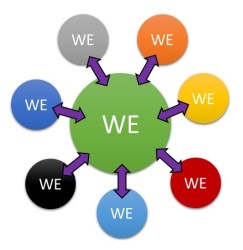
 The second myth of accountability is that accountability is only something I do to other people. Specifically, the people that work on my squad or unit. If my view is that accountability is an external process of me holding others to my expectations or those of the department, then I am creating a culture of “them” and “they.” With this idea of accountability, I believe I must hold them accountable at all times and attempt to control their performance towards my expectations. This often comes across as micromanaging to those being led and to me it feels as if my entire job has become running around putting out fires all day. To those I am holding accountable, their perspective becomes one of contempt and I have now become part of the infamous “they.” The generic pronoun used to describe those higher in power within an organization when we feel there is not a choice in whatever matter is at hand. Ultimately, this style of accountability is only sustainable for as long as the leader can manage the energy to keep it up and are physically present around those they are “leading” to enforce their expectations. Once the leader becomes too tired to keep it up, they retract to the confines of their office to hide because they just cannot manage the level of effort required to constantly hold six to eight people constantly accountable. Worst of all is that none of those on the squad or unit have ever learned how to hold themselves accountable to these expectations because the boss has always done it for them.
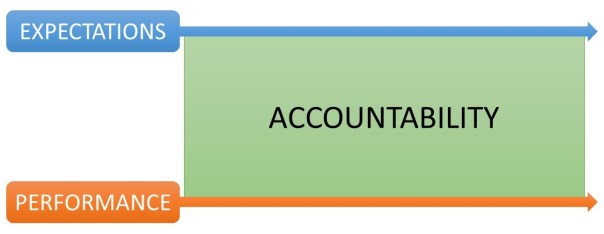
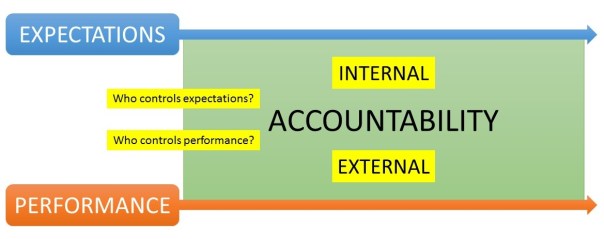
 The truth about leadership accountability is that it is all about ME. It starts with ME. It sustains with ME. It grows with ME. It can be ended by ME. The concept of anything in leadership being “all about me” is a colossal departure from 99.9% of what I read and hear about good leadership, but when it comes to leadership accountability it truly is controlling MY actions, MY attitude, and MY effort that dictate my application of accountability. Leadership accountability is an inside out process. It is through internal accountability that I set the proverbial bar or expectations. Those I am leading see what I am doing, how I am doing it, and most importantly I explain why I am doing what I am doing. As the example is set, then I have earned the right to set external expectations of those I am leading because they know that I am not and never would ask them to do something I am not doing or willing to do myself. In other words, I must exemplify accountability before I can ever expect it from those I lead – that is leadership accountability.






 Thin Blue Line of Leadership