Tag Archives: successful

10 Tips for New Sergeants

For the last 4 years, I have been a Field Training Sergeant. It is truly a pleasure knowing that I am having an impact on the future of my police department by training these new leaders. I see this responsibility as a vital one. If I do not do a good job, I am not just affecting that new sergeant, but every officer that serves on his or her squad.

Just so we are on the same page, here is how my department handles sergeant training. Sergeant field training is a 5 week process – 2 weeks with one training sergeant, 2 weeks with a different training sergeant, and then one final week back with the first training sergeant. At the end of each shift, the Field Training Sergeant completes a daily observation report (similar to FTO) that summarizes and scores everything the prospective new sergeant did throughout that shift. While writing these daily activity reports, I have noticed that there are certain bits of advice that I seem to be repeatedly writing for every sergeant I help train.

So, here are my 10 tips for new sergeants . . .

  1. Successful sergeants spend 80% of their time working with people and 20% doing everything else. Sergeants that fail to inspire, have a poor squad culture, and breed negative officers focus more on everything else rather than people and building relationships.
  2. Successful sergeants find ways to teach their officers to be adaptive decision-makers; not robots that only understand “if – then” statements. When opportunities present themselves, sergeants explain their process for making difficult decisions and everything they took into account. Then, when their officers face similar situations they are taught to apply their own similar process.
  3. Successful sergeants never waste briefing time. There is always something that could be discussed, debated, trained, or learned in briefing. This is one of the few opportunities when sergeants have their entire squad’s attention at one time; make the most of it.
  4. Successful sergeants understand that policing is a complicated profession. Both sergeants and their officers are going to make mistakes at some point. Do not hide mistakes, share them openly and turn them into learning opportunities focused on improvement. Mistakes are fine, just don’t make the same one twice.
  5. Successful sergeants recognize, reward, and promote good police work by their officers. They use whatever methods are available at their department to make this happen anytime an officer goes above and beyond. Not only does this create a more positive culture, but it also spurs on more officers to look for opportunities to go above and beyond. What a sergeant rewards will be repeated.
  6. Successful sergeants have a vision of the culture they want to have on their squad. Squad culture is defined as the conglomeration of your officers’ actions, attitude, and effort. If you asked another sergeant to describe your squad in 4 words, what words would they use? That is your culture. If you don’t like those words, do something about it.
  7. Successful sergeants do not lead from their desks. They get out on the road with their officers and find ways to serve them throughout each shift. They never believe themselves to be too good for the “grunt” work of being a patrol officer; they get in there and get their hands dirty occasionally.
  8. Successful sergeants recognize that their actions, attitude, and effort tell their officers what is important to them. If a sergeant speaks negatively about their schedule, some situation at the department, or some aspect of the job, then don’t be surprised when the officers have that same opinion or are representing that opinion openly. Negativity breeds negativity.
  9. Successful sergeants know what they do not know, then they find ways to compensate for those areas. If they are not good at tactical situations, they talk to the department’s SWAT officers about various scenarios and how they would handle them. If they are not good at traffic or investigations, they build relationships with motors or detectives that are respected. The most important aspect of this tip is that a sergeant never fakes knowledge and gives bad advice to an officer. This will kill their credibility. If an officer has a question that the sergeant does not know the answer to, the best thing they can do is say, “That is a great question, I don’t know, but I know someone who will. Standby and I’ll call you right back.”
  10. Successful sergeants never allow themselves or their officers to stop learning. The minute a sergeant thinks they know it all is the moment they begin sliding towards mediocrity. A sergeant values training and realizes that the more training they can get for their officers, the better their officers will be on the road.

Got a tip you would give to a new sergeant?

The mission at Thin Blue Line of Leadership is to inspire law enforcement supervisors to be the best leaders they can be by providing positive leadership tactics and ideas. Positive leadership and creating a positive squad culture are on-going commitments that must be nurtured and developed over time. Thin Blue Line of Leadership is here to help.

Please do not hesitate to contact us if you have ideas to share or suggestions for improvement. Your thoughts or comments on this blog are always appreciated either below or on our Facebook page. You can also follow us on Twitter at @tbl_leadership.

Continue saving the world one call at a time and as always, LEAD ON!

TBLL – Leadership Reading List

Culture can be nurtured within a law enforcement organization in a number of different ways. I have been fortunate to have multiple opportunities to positively affect my department’s culture by being involved in the Field Training Officer (FTO) Program, as a trainer of Field Training Officers, as a Sergeant, as a Sergeant Field Trainer, and by assisting in the develop of our department’s leadership-based sergeant selection process. All of these opportunities have enabled me to develop a level influence within the culture of the department that I take very seriously. So, when I was asked by a sergeant test candidate what has influenced my personal leadership style and what resources I have used to develop the material that comes out on Thin Blue Line of Leadership, I decided to provide my recommended leadership reading list.

These books have been vital in the development of Thin Blue Line of Leadership content, my own leadership style, my community interactions, how I operate within my department, and also how I operate with my squad of officers. I can vouch for the value in all of them as there are multiple concepts that I have implemented from each of the books listed below. If you are not a big reader or just do not have the time, all of these books can be purchased and listened to by using the Audible app on both Apple and Android devices. About half of these books I listened to while driving in to work and the rest were read the old fashioned way.

These books were all written from the perspective of the business world; not policing. Therefore, as I read each of them, I continually asked myself “How does this apply to policing?” and “How do I incorporate these ideas into my squad/department?” Then I molded the ideas I liked into my leadership style, community interactions, department interactions, and/or squad expectations. For two of these books I have written a law enforcement synopsis and those are linked in the book titles. I have also linked each book’s picture to Amazon in case you are inspired to buy any of the books mentioned.

In case you are wondering, I do not work for Amazon or any of these publishing companies. I simply want to share some good leadership knowledge with you. Enjoy . . .

Start with Why     Leaders Eat Last     Entreleadership

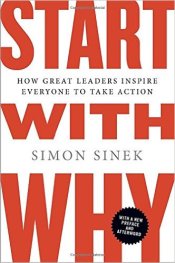
Start with Why by Simon Sinek

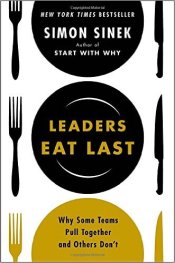
Leaders Eat Last by Simon Sinek

Entreleadership by Dave Ramsey

First fast fearless      Energy bus     Training Camp

First, Fast, Fearless by Brian Hiner (Ret. Navy Seal Lieutenant Commander)

The Energy Bus by Jon Gordon

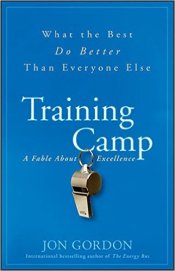
Training Camp by Jon Gordon

Hard Hat     Soup     You Win

The Hard Hat by Jon Gordon

Soup by Jon Gordon

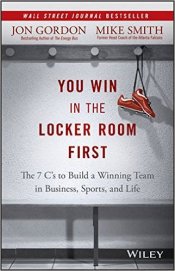
You Win in the Locker Room First by Jon Gordon

Turn Around     Failing-Forward     Miserable

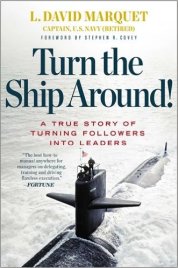
Turn the Ship Around by David Marquet

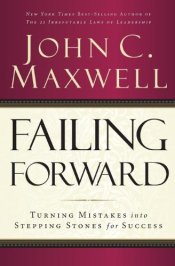
Failing Forward by John C. Maxwell

The Three Signs of a Miserable Job by Patrick Lencioni

Five Dysfunctions     The ideal Team player     Good to GReat

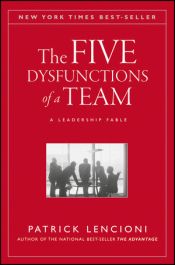
The Five Dysfunctions of a Team by Patrick Lencioni

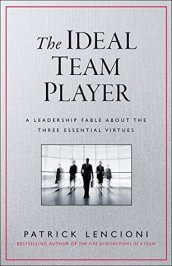
The Ideal Team Player by Patrick Lencioni

Good to Great by Jim Collins

Currently I am reading “Building Shooters: Applying Neuroscience Research to Tactical Training System Design and Training Delivery” by Dustin P. Salomon and believe that it will soon be at the top of this list. I truly hope you get as much out of each of these books as I did. Please let me know if you have any reading suggestions for me and I’ll check them out.

The mission at Thin Blue Line of Leadership is to inspire law enforcement supervisors to be the best leaders they can be by providing positive leadership tactics and ideas. Positive leadership and creating a positive squad culture are on-going commitments that must be nurtured and developed over time. Thin Blue Line of Leadership is here to help.

Please do not hesitate to contact us if you have ideas to share or suggestions for improvement. Your thoughts or comments on this blog are always appreciated either below or on our Facebook page. You can also follow us on Twitter at @tbl_leadership.

Continue saving the world one call at a time and as always, LEAD ON!
3 Signs of a Miserable Law Enforcement Job

“High school kids at In-N-Out Burger and Chick-fil-A are doing largely the same job that kids at any other fast-food restaurant are doing, and yet there are a lot fewer miserable jobs at In-N-Out and Chick-fil-A. The difference is not the job itself. It is the management. And one of the most important things that managers must do is help employees see why their work matters to someone. Even if this sounds touchy-feely to some, it is a fundamental part of human nature.”     – Patrick Lencioni

3signs

The premise of the book “3 Signs of a Miserable Job” by Patrick Lencioni is simply this – staying in a miserable job can have severely negative consequences on a person mentally, physically, and emotionally. These consequences can affect a person’s life both personally and professionally and it does not have to be that way. The good news is that, as supervisors, we have the ability to combat the 3 signs of a miserable job and it really is not that complicated.

Here are the 3 signs of a miserable job . . .

  1. ANONYMITY

“People cannot be fulfilled in their work if they are not known. All human beings need to be understood and appreciated for their unique qualities by someone in a position of authority. . . . People who see themselves as invisible, generic, or anonymous cannot love their jobs, no matter what they are doing.”

  1. IRRELEVANCE

“Everyone needs to know that their job matters, to someone. Anyone. Without seeing a connection between the work and the satisfaction of another person or group of people, an employee simply will not find lasting fulfillment. Even the most cynical employees need to know that their work matters to someone, even if it’s just the boss.”

  1. IMMEASUREABILITY

“Employees need to be able to gauge their progress and level of contribution for themselves. They cannot be fulfilled in their work if their success depends on the opinions or whims of another person, no matter how benevolent that person may be. Without a tangible means for assessing success or failure, motivation eventually deteriorates as people see themselves as unable to control their own fate.”

In relation to law enforcement, if an officer is miserable in their job due to the factors of anonymity, irrelevance, and immeasurability, then what is the cost to them personally, their squad, their department, and the community they are supposed to be serving? Personally, they carry their misery home which adversely affects their family life. They become the salty grump in the back of the briefing room that complains about everything and sucks the energy out of all around them. To the department they are a liability because of the negative impact on the culture and the unpredictability of their actions on the road. The community suffers because the miserable officer represents the worst of the police department which erodes public trust and makes the job that much more difficult for the officers that are not miserable. How many officers are you picturing in your head right now that match this description of a miserable officer?

Here are 25 ways law enforcement supervisors can combat anonymity, irrelevance, and immeasurability . . .

ANONYMITY

  1. Create a team atmosphere within the squad where it is believed that we is greater than I.
  2. When you get a new officer, meet with them individually and get them on board with the squad culture from day one.
  3. Recognize good police work in briefing. What you reward will be repeated.
  4. Have officers debrief good calls for service and share their expertise and successes with others.
  5. Get out of the office and on the road with your officers. Try to get on a call for service or backup each of your officers during each shift, if time allows.
  6. Rotating having officers conduct briefing training based upon their policing strengths and interests.
  7. Meet with officers regularly to discuss their career goals and seek out opportunities to help them fulfill those goals.
  8. Get to know your officers’ families. Create opportunities for them to all get together with the other families of the squad.
  9. Send handwritten thank you notes to your officers’ spouses or significant others to let them know that you appreciate the commitment that the families make to law enforcement, too.

IRRELEVANCE

  1. Making policing relevant is about getting back to the “why.” Know why you chose to become a police officer. Know why you chose to be a supervisor. Share your why with your officers. Get to know their why, find opportunities to relate their why to calls for service, and discuss the relationship in briefing.
  2. As a supervisor, you set the tone and create value in community service. If it is important to you, it will be important to them.
  3. Promote public commendations in briefing by reading them aloud for all your officers to hear.
  4. Teach your officers to be good beat cops and take pride in their assigned part of the city.
  5. Get away from the term customer service and focus on community service. The term customer service cheapen what we do as police officers and builds irrelevance.
  6. Have discussions in briefing regarding who your officers serve. Point out that they serve not only the community, but they also serve each other. Discuss that you, the supervisor, are there to serve them.
  7. Teach your squad to have a focus on finding solutions while on calls for serve; not on producing statistics, being a band aid, or handling them as quickly as possible.
  8. Exemplify and promote a culture of positivity on your squad through your actions, attitude, and effort.
  9. Provide good feedback and evaluations to your officers. In return, ask for them to do the same for you.

IMMEASUREABILITY

Of the 3 signs of a miserable job, immeasureability is the most difficult for law enforcement supervisors to deal with directly. There is no limit to the number of statistics that can be measured for each officer: calls for service responded to, self-initiated activities, arrests made, tickets written, response times, amount of time spent on each call, number of community policing activities, etc. The question becomes, are we measuring the right things?

  1. Clearly define what the “rock star” police officer would do on a “perfect” shift based upon the mission, vision, and operational goals of the department.
  2. Determine what statistics officers and/or the department have the ability to capture that correspond to the “perfect” shift. If part of the “perfect” shift includes community policing and/or positive interactions with the community, then a way to count those interactions must be determined, as well.
  3. Set specific goals based upon what the “perfect” shift would look like that clearly define what success looks like for officers and provide them with a way to track those numbers.
  4. Ultimately, whatever is chosen to be measured must be supported by the officers’ direct supervisors because the direct supervisors will give the statistics being measure their value.
  5. Supervisors must assist officers in seeing the positive perspective to their seemingly negative activities like making arrests or writing tickets.
  6. The question to be answered is how do you measure community policing activity effectiveness? Do you count the number of positive citizen commendations, the number of people that say “thank you” after being arrested/written a ticket, or the amount of time dedicated to solving beat problems? This is where the difficulty in the measurability of policing comes into play and must be answered by departments everywhere.

There are many more ways to combat anonymity, irrelevance, and immeasurability in policing. If these 3 signs of a miserable job are not addressed by law enforcement supervisors, then they will have to deal with the miserable officers they are allowing to be created.

“If you’re still not convinced that this makes sense or that it applied to you, this would be a good time to consider resigning your position as a manager and finding a role as an individual contributor.”  – Patrick Lencioni

The mission at Thin Blue Line of Leadership is to inspire law enforcement supervisors to be the best leaders they can be by providing positive leadership tactics and ideas. Positive leadership and creating a positive squad culture are on-going commitments that must be nurtured and developed over time. Thin Blue Line of Leadership is here to help.

Please do not hesitate to contact us if you have ideas to share or suggestions for improvement. Your thoughts or comments on this blog are always appreciated either below or on our Facebook page. You can also follow us on Twitter at @tbl_leadership.

Continue saving the world one call at a time and as always, LEAD ON!
Culture in Just 4 Words

THE SETUP: A few months ago, another sergeant asked how my squad of mostly brand new police officers was having such great success on the road and in the community. I attributed it to the culture that we had created as a squad in the briefing room and then worked hard to exemplify each shift on the road. When he asked what my squad’s culture was, I quickly rattled just 4 words – Positivity, Activity, Teamwork, and Humility. As I said these 4 words aloud, the other sergeant looked at me like I was holding out on him and I replied, “No really . . . that is our culture in just 4 words and it works.”

THEN IT HITS ME: The realization that came to me as we continued this conversation was that a strong, sustainable culture should be just that easy to define, explain, understand, and apply. Culture has to be tangible and not just something that is said. It also has to be easily articulable and reproducible by all that are involved within it.

THE HOW: I pulled out a piece of paper and divided it into 4 boxes. At the top of each box I wrote one of the words that I had told the other sergeant about – Positivity, Activity, Teamwork, and Humility. Knowing that culture is defined by our actions and attitudes, I made sure that I could define each of the words in terms of both. Here is what I came up with based on what the squad and I had previously discussed during multiple briefings . . .

POSITIVITY

  • Know your “why.”
  • Community service – treat everyone with dignity and respect.
  • Do the right thing, at the right time, for the right reasons.
  • Recognize each other for good police work.
  • Control what you can control – Actions, attitude, and effort.

ACTIVITY

  • Strive to be the most active squad in the city.
  • Calls for service are our priority, but initiative fills the gaps.
  • Take pride in your beat, know your beat, and work it as such.
  • Be a leader on calls – step up where others fear to.

TEAMWORK

  • We before I.
  • Many hands make light work – have a “how can I help” mentality.
  • We back each other up – stay safe.
  • No gossip, no complaining – find solutions.

HUMILITY

  • Get involved – policing is experiential learning.
  • Don’t fear mistakes, learn from them.
  • Remain humble and continue learning.
  • Take training seriously; continue growing throughout your career.

The above 4 words and defining bullet points are what best describe the actions and attitudes of our squad and what we wanted to project to everyone we interact with in the department and the community. The next step was presenting it to the squad.

THE PRESENTATION: On the presentation day, I explained to my 7 officers the conversation I had with that other sergeant and how this all got started. As I spoke about each of the 4 words and their corresponding bullet points, I used specific examples of times when I had seen these actions and attitudes displayed previously by them. I wrote each of the words on the outside of a box that I had drawn on the whiteboard. When everything was said and done, I explained that if everything they said or did on this job could fall into the confines of this box then they would know that they were doing policing the right way. It is only when actions and/or attitudes don’t fit into that box that problems occur and build distrust between police departments and their communities.

REINFORCEMENT: Whenever a new squad member comes to the squad, I go over these same 4 words in the same way as described above. The only thing that changes are newer, better examples. This serves 2 purposes. First, it reinforces the importance of our culture to the officers that have heard it before and keeps it fresh in their memory. Secondly, by going over this on the new officer’s very first day of joining the squad it solidifies how important we take our culture and begins to quickly assimilate them into the fold. If there are no new officers coming to the squad, then I make sure it gets discussed at least once every couple of months.

Between squad expectation presentations, it is vital to positively reinforce the desired culture. Whenever my officers handle a tough call, solve a problem, or demonstrate a great attitude about a tough situation; I make sure to mention it in briefing the next day and thank them for their outstanding service and commitment to our squad expectations. I make sure to specifically attribute whatever they did to the word(s) it best corresponds to. Culture in 4 words has gone over even better than I expected. In fact, they now recognize each other in briefing when they see something on a call that I was not able to get to. This reinforcement creates a positive cycle that just continues building and building.

THE CHALLENGE: Obviously, if you are still reading this far into the blog I have peaked your interest. Answer the following questions to get you started . . .

  1. If your squad was running exactly the way you wanted it to, what 4 words would you chose to describe your squad’s culture?
  2. Once you know your 4 words, list 3 – 5 specific actions or attitudes for each word that exemplify specifically how you would like to see that word expressed by your officers.
  3. Present your 4 words to your squad and get their feedback.
  4. Take the time and make opportunities to positively reinforce the 4 words of your culture.

Squad expectations need to be about establishing culture; not rules. Police departments have plenty of rules, laws, and policies to follow; that’s what those big books of general orders and state statutes are for. If you get the culture right; the rules will take care of themselves. So, I challenge you to discover your 4 words and get them out there to your squad.

The mission at Thin Blue Line of Leadership is to inspire law enforcement supervisors to be the best leaders they can be by providing positive leadership tactics and ideas. Positive leadership and creating a positive squad culture are on-going commitments that must be nurtured and developed over time and Thin Blue Line of Leadership is here to help.

Please do not hesitate to contact us if you have ideas to share or suggestions for improvement. Your thoughts or comments on this blog are always appreciated either below or on our Facebook page. You can also follow us on Twitter at @tbl_leadership.

Continue saving the world one call at a time and as always, LEAD ON!

6 of 7 Core Values for Building a Team – Show Recognition (Video)

Welcome to the Thin Blue Line of Leadership Blog. We’re going to continue with Core Value #6 of the 7 Core Values for Building a Team.

For my department, I created a leadership training based upon the TBLL Blog entitled, “7 Core Values for Building a Team.” Within this training were 7 short videos that utilized modified interviews from the EntreLeadership Podcast which were set to law enforcement related images and words to enhance the parallels. These videos served as an excellent starting point for discussion and debate over the 7 Core Values for Building a Team. The sixth video is from a lesson taught by Dave Ramsey on the EntreLeadership. It is focused on Core Value #6 – Show Recognition.

Over the next few weeks, the other related videos will be added. Please comment either here or on YouTube and let us know what you think. If you like the videos, we’ll look into doing more of them going forward.

The mission at Thin Blue Line of Leadership is to inspire law enforcement supervisors to be the best leaders they can be by providing positive leadership tactics and ideas. Positive leadership and creating a positive squad culture are on-going commitments that must be nurtured and developed over time and Thin Blue Line of Leadership is here to help.

Please do not hesitate to contact us if you have ideas to share or suggestions for improvement. Share your thoughts or comments on this blog below or on our Facebook page. You can also follow us on Twitter at @tbl_leadership.

Continue saving the world one call at a time and as always, LEAD ON!

2 of 7 Core Values for Building a Team – Strive to be a Great Leader (Video)

Welcome to the Thin Blue Line of Leadership Blog. We’re going to continue with Core Value #2 of the 7 Core Values for Building a Team.

For my department, I created a leadership training based upon the TBLL Blog entitled, “7 Core Values for Building a Team.” Within this training were 7 short videos that utilized modified interviews from the EntreLeadership Podcast which were set to law enforcement related images and words. These videos served as an excellent starting point for discussion and debate over the 7 Core Values for Building a Team. The second video is from a lesson taught by Dave Ramsey for the EntreLeadership Podcast. It is focused on Core Value #2 – Strive to be a Great Leader.

Over the next few weeks, the other 6 related videos will be added. Please comment either here or on YouTube and let us know what you think. If you like the videos, we’ll look into doing more of them going forward.

The mission at Thin Blue Line of Leadership is to inspire law enforcement supervisors to be the best leaders they can be by providing positive leadership tactics and ideas. Positive leadership and creating a positive squad culture are on-going commitments that must be nurtured and developed over time and Thin Blue Line of Leadership is here to help.

Please do not hesitate to contact us if you have ideas to share or suggestions for improvement. Share your thoughts or comments on this blog below or on our Facebook page. You can also follow us on Twitter at @tbl_leadership.

Continue saving the world one call at a time and as always, LEAD ON!

HELP WANTED: Police Officers

In August of 1914, Sir Ernest Shackleton led the Endurance Expedition on a voyage to make the first land crossing of the Antarctic continent. Prior to the expedition, Shackleton needed to raise a crew and posted the following help wanted advertisement:

“Men wanted for hazardous journey. Low wages, bitter cold, long hours of complete darkness. Safe return doubtful. Honor and recognition in event of success.”

Even after posting such an unflattering advertisement of the trip ahead, sailor’s responded. In the book, “Quit You Like Men” by Carl Hopkins Elmore, Shackleton said that the response to the advertisement was so overwhelming that “it seemed as though all the men of Great Britain were determined to accompany him.”

By January 1915, the Endurance had become trapped in the thick Antarctic ice and began to break apart forcing Shackleton and the crew to abandon it. They had to set out on foot dragging lifeboats and supplies across the ice for any chance of survival. Eventually they located a suitable place to establish a camp. Shackleton realized that in order to survive they were going to need to take matters into their own hands; so they developed a rescue plan to seek out help.

Prior to Shackleton leaving on the rescue mission, a crew leader told Shackleton, “Whatever happens, we all know that you have worked superhumanly to look after us.”  Shackleton replied, “My job is to get my men through all right. Superhuman effort isn’t worth a damn unless it achieves results.” To make a great, long story short, it was only through the crew’s dedication and Shackleton’s leadership that they were eventually rescued over a year after the ship had become trapped. This is a fabulous story of leadership, sacrifice, and survival, but what really caught my attention was still the unflattering help wanted advertisement that attracted such a positive response from prospective sailors.

With the current climate surrounding law enforcement, how would a help wanted advertisement have to read in order to be just as truthful and unflattering, yet attract exactly the type of people we want in policing? Maybe it would read something like this . . .

HELP WANTED: Men and women wanted for hazardous 20 – 25 year career. Long hours during all times of day and night enforcing laws created by politicians you don’t necessarily agree with. Low to moderate wages protecting and serving a community that you may not even live in. Solve problems and risk life regularly for people that you don’t know and possibly don’t even like you while constantly transitioning between the roles of counselor, guardian, enforcer, educator, warrior, caretaker, and community representative. All interactions with the community must be recorded on video. Actions, especially mistakes, will be highly critiqued, criticized, and possibly penalized. Honor and recognition in event of success.

Honor and recognition in event of success . . . is that all it takes? Yep, along with being part of something greater than yourself and believing that on each and every call you have the ability to make a difference in another person’s life. Those are the results that we, those that call ourselves police officers, are looking for when we chose this career. As Shackleton stated, “Superhuman effort isn’t worth a damn unless it achieves results.” That is why we make the “superhuman effort” for a job that has this kind of description.

So, how do we maintain this level of effort? We remember our “why” . . .

Why did I chose to be a police officer?

Why did I chose to be a leader of police officers?

If you read those questions and cannot articulate an answer, or worse don’t remember, then I challenge you to sit down, brainstorm some ideas, and seek the words that describe why you were inspired to choose a career with this type of help wanted advertisement.

As soon as the right words come together and you can clearly articulate them, put them somewhere very safe where they cannot be forgotten. Your “why” will get you through that 20 – 25 years career just as it got Shackleton and his men through their expedition without a single life lost. If you get the privilege to lead officers through their policing careers, share your “why” often to motivate and inspire greatness in them so that they too may receive “honor and recognition in event of success.”

The mission at Thin Blue Line of Leadership is to inspire law enforcement supervisors to be the best leaders they can be by providing positive leadership tactics and ideas. Positive leadership and creating a positive squad culture are on-going commitments that must be nurtured and developed over time and Thin Blue Line of Leadership is here to help.

Please do not hesitate to contact us if you have ideas to share or suggestions for improvement. Share your thoughts or comments on this blog below or on our Facebook page. You can also follow us on Twitter at @tbl_leadership.

Continue saving the world one call at a time and as always, LEAD ON!
7 Core Values for Building a Team – Part 2

This blog is Part 2 of 7 Core Values for Building a Team. If you would like to read Part 1, click here.

  1. Build unity and loyalty.

Unity and loyalty . . . Aren’t those two of the greatest words to have around when it comes to being part of a team? When unity and loyalty are present, trust is flowing in all directions within the squad, precinct, district, or department – top down, bottom up, and laterally. But, there is a caveat to this and that is that there are just some people that won’t buy-in to the concepts that help build a good team. Regardless of the amount of effort expended on creating the right environment, they will just never get it. So, the leader has 2 options. They can decide that they are just not going to do anything to build a team and therefore they lose everyone. Or, they can work hard to build a team and get the buy-in of the vast majority of the people to create something really special within their department. There is no great secret to building unity and loyalty. It is one of the oldest concepts around. Treat people the way you want to be treated. That’s it. If you want to build unity and loyalty, then no matter how difficult the situation is, just ask, “How would I want someone to treat me under these circumstances?” The consistent practice of that concept will take a person a long way in their growth as a leader that creates positive cultures based upon unity and loyalty.

  1. Exemplify, then expect personal accountability.

Personal accountability is a tough one for many because it means stepping up and taking responsibility when the world is falling apart around them and/or their team. Personal accountability is easy when everything is going great, but not so much when things are turbulent. Leaders must be cautious about forcing personal accountability upon their teams because if it gets crammed down their throats, they will immediately reject it. To bring personal accountability to the team, the leader must first exemplify it to demonstrate how it is done and how it leads to positive growth both personally and for the team as a whole. They need to see it first because the greatest fear in applying personal accountability is that they are going to get themselves into some kind of trouble when they do it. The best thing about applying personal accountability is that it puts the leader in control of the situation. The leader is saying through their actions and attitude that “the buck stops here.” Once that control is accepted, the leader must begin asking questions that lead to solutions and not allow themselves to fall into a victim mentality. Here are some examples of personal accountability questions – What can I do? How can I learn from this mistake? What can I do to make a difference today? How can I be better? Because each of these questions is based on the concept of “I,” it puts the leader in control of developing a solution to whatever the problem is through their own actions, attitude, and effort. After the team sees personal accountability applied by the leader day in and day out, they will also begin applying it to their tough situations. Having a culture based upon personal accountability is one of the biggest differences between having a culture of mediocrity and a culture of excellence.

  1. Show recognition.

All of the above listed concepts are great, but they do not mean a thing if they are not ingrained into the culture of the team. A leader has the amazing opportunity to pick and choose what gets ingrained into a team’s culture by being selective of the actions and attitudes they recognize, reward, and promote. But, it all starts with the leader first having a vision of where they want the team to go and how they want them to get there. They must define the path and the goals to be achieved if the path is followed. Then, the leader must focus on finding behaviors that officers are doing that support that vision. When actions and attitudes are present that support the leader’s vision, it is imperative of the leader to recognize them and find ways to reward them for the behavior. One of the simplest rewards a leader has at their disposal is verbal praise. When giving verbal praise, do not just say, “Good job;” be specific about what the behavior was that made it good. If the leader says, “Good job, I really like the way you took the time to calm that victim down before doing the interview,” then not only has the leader praised the officer, but they have defined what exactly the behavior was they liked. After recognizing and rewarding something like that, what do you think that officer is going to do they next time they interview a really traumatized victim? That’s right, they are going to take the extra couple of minutes to talk to the victim on a human-level before getting down to the facts of the situation. After recognizing and rewarding the behavior, it must be promoted. One way to promote positive behaviors is to bring them up in briefing with the rest of the team around. This creates a second opportunity for the leader to recognize/reward the officer and then promotes it to the other member of the team. Obviously, the bigger and better the behavior, the more substantial the recognition, reward, and promotion should be. For example, if due to the heroic actions of an officer a person’s life is saved, then hopefully the department has some kind of official life saving award that can be given to the officer and thus the promotion of the behaviors goes to the highest ranks of the department. The key is to remember that what gets rewarded gets repeated.

  1. Make people feel safe.

To build a team, a leader must make the people on the team feel safe. Safe is not referring to the inherent dangers of the job. Safe, in these terms, means from the internal turmoil that can be present within an organization or the team itself. When there is turmoil within a group, like backstabbing, complaining, or general apathy, then no member of the team will ever feel safe within the group because they are always worried about what is going on when they aren’t around. It isn’t until they feel safe within their team that they can go out into the community and do their best work because they know that the team has their back. Creating that sense of safety is the job of the leader. When there is safety within the team, the natural reaction is the development of trust and cooperation. Trust and cooperation will lead people to do amazing things; things that are above and beyond the call of duty. When an officer stays late to help another officer impound a bunch of evidence, that shows that they have a level of trust and cooperation built. That trust and cooperation comes back in spaded when that other officer is wounded on a call and the team comes together to rescue him or her in the face of danger. In order for this level of trust and cooperation to exist, everyone must believe at their core that the other members of the team would be willing to do the same thing for them. Ultimately, people just want to feel like they belong. If there is a strong sense of belonging among the members of the team, then trust and cooperation will flourish among the group.

Instead of looking at culture, vision, mission, purpose, alignment, and value as 6 different items that a leader must work at getting across to their group, look at it as the single task of building a team. Think back to the best teams you were ever a part of and ask what it was that made those teams so special. What you’ll find is that the team had culture, vision, mission, purpose, alignment, and value in what they were doing. By building a team, the leader is creating a lens which each individual officer can look through as they go about doing their job each shift and see things in a similar manner instead of through just their own individual perspectives. Only then will officers be willing to drop their own personal agendas and give their blood, sweat, and tears for the good of the organization and the community.

If you would like to read further about these concepts, here are some good reading suggestions:

“Start With Why” by Simon Sinek

“Entreleadership” by Dave Ramsey

“QBQ! The Question Behind the Question” by John Miller

“The Energy Bus” or any other book by Jon Gordon

“Leaders Eat Last” by Simon Sinek

The mission at Thin Blue Line of Leadership is to inspire law enforcement supervisors to be the best leaders they can be by providing positive leadership tactics and ideas. Positive leadership and creating a positive squad culture are on-going commitments that must be nurtured and developed over time and Thin Blue Line of Leadership is here to help.

Please do not hesitate to contact us if you have ideas to share or suggestions for improvement. Share your thoughts or comments on this blog below or on our Facebook page. You can also follow us on Twitter at @tbl_leadership.

Continue saving the world one call at a time and as always, LEAD ON!

Creating “Wow” Moments in Policing

Why does the general public like the fire department better than the police department? The simple answer is this, the fire department is better at creating positive “wow” moments – saving lives, putting out fires, and of course getting cats out of trees. Sure, as law enforcement, we have our positive moments too, but we also have the disadvantage of having to hold people accountable for their unlawful actions by making traffic stops, writing tickets, placing people under arrest, and occasionally using force.

rock-and-a-hard-place

It would seem that law enforcement is stuck between the proverbial rock and a hard place. Therefore, it becomes imperative of law enforcement leaders to support, recognize, reward, and promote their officers when they have the opportunity to take initiative and create positive “wow” moments for those they serve.

I would like to share a story that occurred a couple of weeks ago which represents the concept of creating a “wow” moment in policing. Anyone who has ever worked overnights can sympathize with the call that comes out with only 30 minutes remaining in the shift. The call that you know is going to unexpectedly cause you to stay late.

This particular call happened to be a 90 year old male who was having difficulty breathing. The two assigned officers arrived at the nursing home to find the fire department doing their best to save the elderly gentleman’s life, but ultimately learned that this medical call had become a death investigation. As the primary officers, they both knew they were now going to be on this call for at least a couple of hours past their regular time off.

The officers began doing their due diligence with the investigation – speaking to the reporting party, taking notes, locating a doctor to sign the death certificate, and so on. After just over two hours, they had everything completed with the investigation and were ready to go home to get some much deserved sleep before coming back that evening to do it all again.

As the two officers were getting to the nursing home’s front doors, they heard one of the nurses mention that the deceased’s wife was on her way there. The nurse mentioned that the couple had been married for 67 years and she still lived on her own just down the road. The officers spoke briefly and then asked one of the nurses if they could go back up to the room before the wife got there.

In order for the fire department to do their job, the elderly gentlemen had been placed on the floor, his clothes removed, LEDs placed all over his body, and an oxygen mask put over his face. That is how he was left by fire and after completing their investigation that is how he was left by the officers to wait for the mortuary company to pick him up . . . until they heard about his wife.

The two officers returned to the room and carefully moved the elderly gentleman’s body up into his bed. They removed the LEDs, rebuttoned his shirt, took off the oxygen mask, pulled up the covers, and made him look as if he was comfortably sleeping. They passed by the wife without saying a word about what they had just done and for all she knew this was exactly how he had passed.

That is how you create a “wow” moment in policing. While the wife will probably never know what they did, every employee at the nursing home that saw the actions of those officers experienced a “wow” moment. Service to the community that goes above and beyond what you could ever ask for or expect; service that makes the average bystander step back and say, “wow.”

How many times do you think the nursing home employees shared that story? What do you think the positive trickle-down effect is from this one event? We’ll never be able to quantitatively measure it, but just knowing the power that negative police interactions can have gives you some idea. The key is that we, as law enforcement, need to continue getting better at creating these “wow” moments.

Here are 5 ways that law enforcement leaders can help officers become better at creating positive “wow” moments:

  • Point out opportunities that present themselves. The first step is just recognizing opportunities that are there. Being a supervisor that is out on the road with your officers puts you in the position to see the potential and help lead your officers down the path of creating a “wow” moment, if they don’t see it themselves. Think positively outside the box.
  • Support your officers when they find an opportunity. Inevitably, opportunities to create “wow” moments are going to come when you are slammed with calls for service or are running under staffed. Being a leader means that you are willing to take on extra work when needed to support officers that find an opportunity to create a “wow” moment. You may have to help cover calls or do other work to make up for their temporary absence from the road, but in the end it will be well worth it.
  • Recognize “wow” moments when they occur. To reinforce the effort made by officers to create positive “wow” moments, you must keep a watchful eye out for when they occur and note them for future reward.
  • Reward officers for their effort to create “wow” moments. Once you recognize that an officer has gone above and beyond to create a “wow” moment, it is imperative that you reward it in some way as soon as possible through whatever means of recognition your department has. If there is no formal way through the department or it doesn’t rise to that level, create an informal way to recognize the effort within your squad.
  • Promote both the officer and the “wow” moment. Publicizing the exceptional work done by one of your officers is not only good for the officer and his/her career, but also for the department. The more often “wow” moments are recognized, rewarded, and promoted both internally and externally, the more likely they will be to be repeated. Once this is done effectively enough times, the momentum will help to keep the “wow” moments coming without nearly the effort it took to get them started. In addition, as other officers hear about the varying ways “wow” moments have been created and were rewarded, the more innovative they will be in finding their own opportunities to create “wow” moments.

The mission at Thin Blue Line of Leadership is to inspire law enforcement supervisors to be the best leaders they can be by providing positive leadership tactics and ideas. Positive leadership and creating a positive squad culture are on-going commitments that must be nurtured and developed over time and Thin Blue Line of Leadership is here to help.

Please do not hesitate to contact TBLL if you have ideas to share or suggestions for improvement. Share your thoughts or comments on this blog below or on our Facebook page. You can also follow us on Twitter at @tbl_leadership.

Continue saving the world one call at a time and as always, LEAD ON!

10 Keys to a Successful Oral Board

In law enforcement, there are several processes that can be implemented in order to create a ranked eligibility list for competitive special assignments or promotion. There are written tests, administrative reviews, and/or assessment centers; but the one consistency amongst nearly all processes is the oral board.

Thin Blue Line of Leadership is not a test preparation blog, but as leaders we often take on the role of assisting our officers in preparing for these processes. One of the most altruistic values any leader can possess is the belief that their own success is found through the success of their officers. Therefore, Thin Blue Line of Leadership is going to share 10 keys to having a successful oral board so that you may share them with your officers to assist with their next testing process.

Before proceeding, let’s get some of the givens out of the way . . .

  • Practice, practice, practice! Do a mock oral board or record yourself giving answers to questions and review it.
  • Look your best because sometimes books do get judged by their cover.
  • Be on time.
  • When entering the room, greet each person with a firm handshake and wait to sit until invited to do so.
  • Make meaningful eye contact with each person on the board while answering questions.
  • Smile! Have a positive, enthusiastic attitude about getting the opportunity to test for the position.
  • Take your time – think then speak.

Now that the basics are out of the way, let’s look at 10 keys to having a successful oral board that will leave a positive, long-lasting impression with the board members.

  1. Know why you want the position and be able to articulate it clearly. This sounds simple, but often it is very difficult to put this into clear and concise words. To help with this, try writing down the first 10 reasons why you want this particular position as quickly as possible. Then create a few sentences using more generic terms that encompass all of the why’s you came up with. Some terms or variations of them that may help with this would be passion, inspiration, educating, meaningful, leadership, mentor, alignment, vision, strategic, etc. Think of it as your own personal mission statement for the position you’re going after.
  2. Know the job description. Hopefully, before applying for a competitive process, you have read any available General Orders specific to that assignment, know the expectations of the position, and maybe even have had the opportunity to go on a temporary duty assignment. Once you are thoroughly familiar with the position, the next step is to go through your previous experiences, talents, skills, and accomplishments to see what relates and what doesn’t. While it is important to know the strengths you are coming into the process with, it is just as important to know your weaknesses and how you plan to account for them if you get the position.
  3. Organize your accomplishments into themes. While your resume is an excellent tool for putting your past experience in chronological order, it is not an easy way to remember everything you have done when under the pressure of an oral board. Therefore, one of the best things you can do to assist with memory recall during an oral board is to organize all of your accomplishments and accolades into themes. Here are some theme ideas: Organizational Excellence, Mentoring, Problem Solving, Community Outreach, Team Building, Programs, Significant Investigations, Strategic Thinking, Problem Solving, Resiliency, etc. Once your accomplishments are organized, whenever a question comes up that relates to one of these themes, then you will have a much easier time coming up with a relevant experience.
  4. Consider multiple perspectives. When testing for a specialty assignment, but especially when trying to promote, it is vital to show that you can be a global thinker that sees the “big picture.” One easy way to make sure you do this in your oral board it to answer questions either from a “big to small” or “small to big” perspective to help keep your thoughts organized. As you answer more grandiose questions like, “How does a police department build trust with its community?,” start from the perspective of the community, then discuss the perspective of the police department, next go into how you would implement your thoughts with a squad, and finally how you personally have helped and will help the department build trust with the community. This is a “big to small” example – society/community, police department, squad, and then self – but depending on how the question is asked it would be just as easy to start with yourself and go up to the society/community perspective.
  5. Visualize yourself already having the position. As you visualize yourself in the position you are testing for, consider what a day in that life might look like. What would your personal challenges be? What are some possible difficult situations you may face? What would your strongest values be? Many times, oral boards will have questions that relate to “what if” scenarios from the perspective that you are already in the position. Two examples from a sergeant promotional process might be questions like, “What would your top 3 expectations be for your squad?” or “How would you handle an officer that is not performing up to your expectations?” If you have already visualized yourself in situations similar to this, your answers will be more natural and confident.
  6. Personalize your answer with a story. Everyone loves a good story; so give it to them. It’s great to hear what you would do, but it’s always better to hear what you have done. Actions always speak louder than words. This relates back to organizing your accomplishments by themes. When your memory recall is good, you’ll be better suited for providing a relevant story or experience to the given question. But, be sure that it is pertinent to the question; because there isn’t a story much worse than a long-winded one that tells the listener nothing of value.
  7. Be aware of current “hot button” issues facing the police department, and/or law enforcement in general. Many oral board questions have to do with topics regarding high liability, current media headlines, or recent internal department issues. Some of the more common topics include officer discipline, staffing, overtime, on-body cameras, racial profiling, officer production without quotas, use of force, eroding public trust, etc. An interesting article making its way through law enforcement recently has to do with the Warrior versus Guardian mindset. This is an excellent example of a timely topic regarding law enforcement that could make for an interesting oral board question. Being aware of current issues such as these and having a defined opinion of your own will assist you in answering these types of questions.
  8. Consider the oral board an opportunity to teach. What is the topic you are teaching about? . . . YOU! Only you have an idea of how well the members of the board know who you are when you walk in there. No matter how well it is, there will always be aspects of you they don’t know or are unsure about. Use the oral board as an opportunity to teach the board members about aspects of you they aren’t familiar with. Think of it more as a presentation on your part instead of an investigation into your qualification on their part and that alone will help reduce your stress level related to the process. You need to be an expert on yourself.
  9. Truly believe you are the best candidate. This is a must or don’t even walk into the room. By the time you get to this point, you should clearly be able to articulate what your best qualities are, how they relate to the position you are testing for, and the value of everything you have done to prepare. This should come off as humble confidence, not arrogance, and it must be exemplified from the moment you walk into the door, shake their hands, and sit down to begin answering questions. If you have doubts about yourself as the best candidate and do not get the position this time around, take the time to reflect on what you could do to make yourself into the best candidate. From that moment to the next testing process, do everything in your power to make yourself the best candidate. If you believe in yourself, so will others.
  10. Have something to add when asked, “Do you have anything else to add?” Most oral boards are going to end with a question similar to this one. This is your final chance to make sure that nothing is left unsaid. If there is a personal story of yours that exemplifies why you are the best candidate, then this is the place to use it. Here is a word of warning, though, do not do this off-the-cuff the day of the oral board. If you are going to plan a story to present at the end of the oral board, be sure to practice it numerous times so you have it down. Tell it out on someone you trust and get their feedback. Only then will you truly have something to add that will leave a positive, lasting impression with the board members.

Below are some common questions asked on law enforcement oral boards. Try writing out full answers to these questions using the tips from above. By having pre-determined answers to these common questions, you’ll exude confidence and breathe a sigh of relief if any of them come up.

  • Why do you want to be a _________________?
  • What have you done to prepare for becoming a _________________?
  • What would your top 3 priorities be as a _________________?
  • What are the roles and responsibilities of a _________________?
  • If you could change one thing at this department what would it be?
  • Describe a difficult experience you have had with a peer and how you handled it.
  • Describe a difficult experience you have had with a supervisor and how you handled it.
  • What do you see as your biggest strengths/weaknesses?
  • How do you account for your weaknesses?
  • How would you handle employee issues as a _________________? (ie. morale, motivation, disgruntled employees, production, etc.)
  • Describe the process you use to make a decision.
  • What do you see as the biggest challenge facing the department over the next couple of years?
  • Name 3 words that describe the key attributes you would bring to the position of _________________?
  • What have you learned from previous assignments that would be an asset to you as a _________________?
  • Name another employee you have worked with directly that you have a high level of respect for and explain why.
  • Describe a time when you went out of your way to help another member of our department.

For some ideas on how to answer these questions, see the Thin Blue Line of Leadership Table of Contents. There are multiple blogs on squad expectations, building influence, culture development, general leadership, etc. Feel free to use any of these ideas and make them your own. Best of luck with your next oral board.

The mission at Thin Blue Line of Leadership is to inspire law enforcement supervisors to be the best leaders they can be by providing positive leadership tactics and ideas. Positive leadership and creating a positive squad culture are on-going commitments that must be nurtured and developed over time and Thin Blue Line of Leadership is here to help.

Please do not hesitate to contact us if you have ideas to share or suggestions for improvement. Share your thoughts or comments on this blog below or on our Facebook page. You can also follow us on Twitter at @tbl_leadership. Continue saving the world one call at a time and as always, LEAD ON!